Tag Archive | "Hollywood"

Tags: , , , , , , , , , ,

New Free Movie Making Animation Software–Interesting

Posted on 16 February 2010 by TRLocke

Sarah Palin is a lightning rod of media attention. Her endurance in mass media has been amazing. When I came across this cool  new movie making animation software program by Xtranormal called Text to Movie and her pre-animated avatar, I couldn’t resist using her image to help push my book on Larry King.

Although this program is limited a bit by its computerized voice and actions, the possibilities of what can be done with it, even in its current state, are compelling.

I wrote this script, directed it and uploaded it in a matter of minutes. Getting the timing as right as possible and getting the voices to say what I wanted, took a couple hours, but viola. Moments after posting, it had garnered over a hundred views and hopefully will keep spreading.

This technology holds huge promise for writers and directors:  sharing story ideas, jokes, writing short scenes and even creating an entire web series. As the technology and text to speech capacity improves, I can imagine a lot from this program. Tell me what you think.

TRL

Comments (2)

Tags: , , , , , , , , , , , , , ,

I Wish I’d Written Twilight!

Posted on 19 November 2009 by TRLocke

new-moon-posterWell, the first show is at Midnight here in L.A. I imagine it’s opening around the country at midnight as well. That would mean that, for anyone on east coast time, it will likely open just as I’m finishing this post. Twilight has become a phenomenon.  My daughter is on “Team Jacob”—the werewolf.

No we’re not going to the opening tonight, but she did insist I drive by the theater to see her comrades camped outside. They’ve been there all day (some probably all night). They must be the first in the seats to see it. She wanted to be with them—wearing her New Moon shirt, gushing over a guy who, only a few years ago, she didn’t even notice when he was in movies. Amazing to watch as new stars are born.

I want to write something that big so bad. I want to have teens and their parents and grown people who should know better camped outside the theater talking about which is their favorite character. As one now successful actor I interviewed in my book said, “I remember, years ago, I was in Gelson’s Market with only a couple bucks in my pocket when in walked this big movie star. I said to myself, ‘That’ll be me one day.’”

There’s something much deeper about this movie phenomenon we are experiencing.  Stephanie Meyer took the traditional characters of vampires and werewolves and turned them into the Capulets and the Montagues. She then took a pale, blood-sucking, night crawling, serial killer and turned him into a diamond-skinned, superhero with a powerful love Jones for the only girl in high school whose mind he can’t read.

High school? What’s Count Dracula doing in high school? Seriously, this guy is a couple hundred years old. So what if he’s young looking? What kind of perv is that? I mean, when I was 17 I thought I was too mature to date 16 year-olds. This is a guy whose obviously never heard the words to Steely Dan’s Hey Nineteen—“We got nothing in common. No we can’t talk at all.” And that guy was only 15 years older than the young girl he was considering.

But alas… love.

But since when do werewolves actually turn into giant Wolfwolves?  What is this? Do silver bullets even work anymore? Vampires have superhero powers? They can come out in the sun? They don’t drink human blood? They don’t turn into creepy bats? They can’t be killed with crosses, holy water and garlic? They don’t have fangs? What the hell? Are they trying to put Blade out of business?

I think I understand why my daughter is on Team Jacob. I think Jacob represents, for girls, the best of both worlds. On one hand, you’ve got this cute boyfriend with a great body that everyone thinks is hot. On the other, you’ve got this big shaggy dog to protect you. Girls and their fantasies.

The point of this blog is for writers and film makers. The Twilight Saga represents the best of all worlds for the Hollywood movie machine and at the same time manages to be fresh, new and young.  Vampires are among the most produced characters in Hollywood. From the dawn of moving pictures, vampires have creeped across the walls of theaters. From Nosferatu to Dracula to Blade, the basic makeup and character of vampires has remained unchanged.

What Meyer’s did so brilliantly—and if she is to be believed from her interview on Oprah, so accidentally and luckily—is figure out how to combine genres in a commercially viable way. Romance/Horror/Fantasy/Adventure.

BUT…  Good thing she wrote it as a book. If she’d pitched it as a movie or screenplay before it was a successful book, no one in Hollywood would have touched it. How do I know? Because Nosferatu came out in 1921 and no one touched it since—not successfully anyway. I should say not seriously. There may have been comedic takes on vampires or werewolves that did pretty good, but they didn’t change the nature of those archetypes.  This is a prime example of a movie that only got made because of the book.

Hollywood will happily film a successful book, video game, TV show, stage play, fairy tale or an endless number of sequels, prequels and remakes; but when it comes to putting millions of dollars into original stories movie studios, more often than not, pass.

What’s that say to you about your new, original story that no one’s ever seen before? If no one’s ever seen it before, don’t expect Hollywood to make it.

But sell it as a book first or turn it into a successful stage play, and if you’re sales figures back it up, Hollywood will come to you.

Please tell me what you think. Do you agree? Disagree? Did I miss something? I’d love to hear from you in the comments below. Thanks for reading.

Good Luck,

T.R. Locke

Comments (10)

Tags: , , , , , , ,

Q&A: “Will Hollywood Reject Me for my Political Views?”

Posted on 04 November 2009 by TRLocke

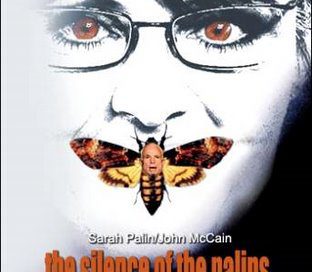
palin-silenceI received a question on my blog from a filmmaker and reader of my book. I’d like to answer his question in this post. For those who don’t know, in my book, I refer to the things I Wish I Knew before I moved to Hollywood as “WIKs”. The question is as follows:

Mr. Locke,

I just had a quick WIK question and I would be grateful if you could take a sec to answer it.  The political climate of Hollywood is far-left to left.  When I move there, will I be blacklisted or in any way discriminated against if I have a believe [sic] in or espouse in a different political ideology than from what currently dominates?

Thanks,
Charles

Excellent question, Charles. My answer is no. Here’s my thinking and belief. This business is really all about the dollars. If your idea has an audience and can make money, it really doesn’t matter what you believe.

Consider this for a minute: Hollywood can be understood to be anything that concerns the media. When you talk about celebrities of any ilk, they are represented by agents here in Hollywood. That means Glen Beck, Rush Limbaugh, Bill Oreilly–they all have Hollywood agents. They are all TV/Radio celebrities and you can’t get much more right wing than they. But not just them, nearly everyone you see anywhere representing any view (including many politicians) have agents in Hollywood. It’s how they get their shows negotiated and their book deals, etc. If money is coming, Hollywood doesn’t care what side of the fence it comes from.

Second, consider this: Hollywood tends to make far more conservative movies than liberal ones. That might sound a bit crazy to you, but think about it. Do you see more movies about war, fighting, and getting rich or about saving the forest, everyone getting along and sharing? Liberal stuff is simply not as dramatic. That’s just a fact. Far more movies are about national pride and willingness to die or kill for country, family, or honor. You could probably pitch an idea called, “Sarah Palin Saves the World” where you have the former Alaska governor flying around in a Huey sniping terrorist and clubbing baby seals. If you can show there’s a big enough audience to make a profit doing so, someone in Hollywood would be willing to make it. Okay, maybe not with clubbing baby seals, but clubbing terrorist, sure–especially if the female lead shows a little skin. For the right price you might even get the genuine article herself—check with her agent.  Remember Hollywood was torturing terror suspects long before Gitmo.

I just saw a report on TV that talked about how militarism is still so much alive in Hollywood. It’s very true. Militarism sells tickets.

Finally, I don’t think Hollywood is really, down inside, as liberal as it’s made out to be. As I said, it’s all about the dollars. Hollywood is notorious for typecasting, stereotyping and pigeonholing anything they can’t immediately see a big market for. They make vampire and sex films, not because they believe in vampires and sex, but because there’s a huge market for it right now. If the market disappears, Hollywood will dump vampire production faster than you can vote down universal healthcare.  Tyler Perry has proven there is a market for African-American films, but judging from production, Hollywood still seems to be hesitant to trust anyone to make one except him.

So to answer your question, no I don’t think you’ll be discriminated against for espousing a different political view—namely because I’m not sure your view is different.  Remember the current governor of California is an actor—and a republican. So was Regan before him.

I will say this though; you will have trouble getting any actual political movie made. Political movies don’t do well in general unless they are a few generations removed. But Hollywood might be happy to put your ideas on radio, TV and books, because in those media, politics sell like hotcakes.

Hope that helps.

TRL

Comments (8)

Tags: , , , , , , , , , , , , , , , , , , , , , , , , , ,

When Should Singers/Musicians Move to N.Y. or Hollywood?

Posted on 21 October 2009 by TRLocke

050609_SM_hustleFlow_Ex

This is the third in a series of articles about relocating to Hollywood or New York to follow dreams in the entertainment industry.

Part III—Singers/Musicians

When should a singer or musician move to Hollywood or N.Y? It’s a good question. And what’s interesting about this one is we’ve finally gotten to a category of entertainment that has a nationwide televised contest that actually tries to answer that very question.

American Idol has come a long way towards helping us understand what the music industry is looking for when they look for singers to turn into stars. Of course talent is necessary, but it’s not the only thing. The vast majority of singers who progress to the final rounds are those who have already had success on the local level. They’ve learned how to perform before an audience, they know who they are—their style, their range, their genre—and by the time they are on the show, they look as comfortable as any star performing on the Grammys.

Musicians and singers have more outlets for their talent than other performance artists. A band or a singer can set up in a bar, a coffee house, a church or even all three any night of the week. And if they’re good, they’ll get paid, too. They can rent a hall and throw a concert any time they like. They can also pull a “Hustle and Flow” and set up a studio in any room lined with egg crates, pillows and blankets to record the next number one hit to sweep the nation. That’s because music has the simplest and cheapest distribution system available today. Any artist anywhere can easily record and fully produce a song on his computer using software that’s either free or cheap and get audibly the same quality many studios turn out. In fact, here’s one such software from one of my sponsors that turns your computer into a studio for only $29:

After musicians create a song, they can then post the file on MySpace, Amazon or any of a dozen or more other sites and watch it sell around the world. They can even film their own viral music video and release the song through YouTube.

So when should a musician or singer move to Hollywood or New York? This one is simplest of all to answer. They shouldn’t. Stay where you are. Do your thing locally and put your stuff out online and independently. Hollywood will notice you when you’re ready and they will come to you.

Why? Well, the fact of the matter is that you have much better chance of being able to get on a stage in your hometown than you do in Los Angeles or New York. Besides that, in your hometown you already have fans. And it’s those fans who will be your most loyal customers even after you become a nationwide sensation. It’s those people you will need to help boost your popularity worldwide—to run your fansites, to brag about you on social networking sites. Hometown fans are so strong because they not only are supporting you, but they are supporting where you come from. They are representing your town to the world. You help put each other on the map.

And that’s another reason you don’t want to move to N.Y. or Hollywood. You aren’t from there. Music tends to have this local loyalty that’s much stronger than other art forms. I mean, there are New York writers, but nothing compares with the kind of slavish loyalties that music fans have.

Consider this: Jay-Z is from New York. He’s loved around the world, but he is worshiped in Brooklyn. He didn’t move to New York, he grew up there. His music is as culturally and lyrically linked to New York as Snoop’s is to L.A., and as T.I’s is to Atlanta.   Similarly Dave Matthews Band blew up in Virgina and released their album independently before sweeping the world. The same story is repeated for country, rock, and rap stars all across America. Blooming where you were planted is the rule in the music industry, not the exception. If you bloom big enough, Hollywood and N.Y. will take notice. At that time, they may call you to move. That’s when you may want to consider it.

One of the artists I interviewed in my book is a multi-platinum hip hop producer that I’ve known for years. His story is that he moved to Hollywood only because one of his friends got a contract with Death Row Records back in the 90s. Death Row found his friend in Atlanta and brought him to L.A. This artist went along. And because he was always hanging out at Death Row helping produce beats for free, he too eventually got offered jobs. So I concede there is one other time when you might want to move to N.Y. or L.A.—when you have a friend who gets a contract with a major label and wants you to come along.

But even when Hollywood takes notice, it doesn’t mean you need to move. Many producers and musicians, like writers, find their hometowns to be greater sources of inspiration for their art. Flying out to meet with other artists or agents in the industry centers will usually suffice. Keeping connected to your roots helps you stay authentic. There is nothing worse for an artist than to lose his authentic self-expression. An artist who does so risks losing the very thing Hollywood seeks to exploit to make him a star.

With all the options for performing, recording and releasing music that exists today, there is no sensible reason for any musician to move to Hollywood unless invited.

Please tell me what you think. Do you agree? Disagree? Have questions? Please share from your experience in the comments below and share this article with others. Also look for my next article on Directors and Producers in the next few days. And please check out my book for all the advice from my producer friend as well as great insights from gold-selling and Grammy nominated singers and songwriters and many other successful celebrities.

Good Luck,

TRL

Comments (7)

Tags: , , , , , , , , ,

I’m an ACTOR… Should I Move to New York or Hollywood?

Posted on 16 October 2009 by TRLocke

hitchhikerThis is the second in a series of articles about relocating to Hollywood or New York to follow dreams in the entertainment business.

Part II–Actors

If you’re an actor and you’re wondering whether it’s time to move to New York (the home of live theater and a decent amount of film production) or Hollywood (the home of most film and television production), you might want to consider a few things.

In a blog I wrote last week, I detailed information I learned from one of Hollywood’s top stars whom I have the honor of knowing and thus interviewing for my book. Consider these business facts:

  • There are 120,000 SAG (Screen Actor’s Guild) actors in Hollywood.
  • At any given time 85% of them are out of work.
  • The average salary of a SAG actor is less than $10,000 a year.
  • Most of them are just trying to earn the required $7,500 a year to keep their health benefits.
  • 18-20% of them fall into star roles and make serious money.
  • Less than 1% are the ones you read about and know, the real stars, the actors who make million dollar and double digit million dollar salaries.

The actor I interviewed falls into that last group—earning $250,000 an episode for his role in a hugely successful show. He’s one of the lucky ones. But it took many years for him to get to that point.

The question that is perhaps most important in making this decision is whether the move will afford you greater opportunities than it will cost you to do it.  Here’s what I mean:  It is obvious that there are many more auditions being held in Los Angeles and New York than in Baltimore, Cleveland, Tampa, Salt Lake City and perhaps the rest of the country combined. But what might not be so obvious is whether that translates into a better shot at becoming the actor you want to be. It would seem it should. But consider this:

  • There are many more actors competing against you for that very reason.
  • Because there are so many actors, there are gatekeepers set up in L.A. and N.Y. to block many newbies.
  • Many of the actors competing against you have far more experience than you may have.
  • If you don’t have an agent (most new actors in Hollywood/N.Y.  don’t), you may not even hear about the auditions for your type.
  • It will cost you far more money to wait for your chance in N.Y. and L.A. than any other place in the country.

Again, I’m not writing this to pour water on your fire. I’m writing this because I believe, as one quote says, “The best way to achieve your dreams is to wake up.” By wake up, I mean recognize the realities of the world you are looking to enter. Too often young actors are lured to Hollywood with dreams of becoming the next Will Smith or Jennifer Aniston. They are lured by the glamour of the less than 1% of actors who enjoy such glamour. Not many have their hearts set on even being one of the 18-20% group—those actors whose faces you may recognize, but whose names you don’t know.

It’s much easier to be a big fish in a small pond. One thing for sure about Hollywood, here you are swimming in the Ocean. Before you move here, make sure you’re ready for the salt water and sharks.

How do you do that? You get big in your town first. You find the theater groups that are active where you live and get involved. If you live in a very small town, you might want to move to a city near you to expose yourself to more opportunities.

Most actors considering a move to New York or Hollywood should have already done these things. If you have succeeded in those smaller ponds, move up to a lake. There are many acting opportunities in larger cities like Las Vegas, Orlando and Chicago. You may want to cut your chops in those large cities first. Doing so will get you used to the process so that, when you do get your shot in L.A. or N.Y., you’ll know better what to do to win the role.

But say you’ve done that as well. Let’s say you’re going to get a roommate (or two) and make the costs of living in one of these cities as cheap as possible. What’s the benefit of moving to N.Y. or L.A? Mmm…?  Maybe sharing my story would illustrate it best.

Here’s the set up: I moved to L.A. with my family after placing as a semifinalist the Chesterfield screenwriting contest, getting an offer to purchase my screenplay, and attaining representation as a screenwriter. At our new apartment in Burbank another couple had moved here in support of their son’s acting career. He’d won a major talent contest in New Mexico, had gotten an agent and booked a few TV shows and movies. The mother had just taken a job as an agent with her son’s talent agency.

Within two months of being here, while chilling in the hot tub by the pool, the mother asked me if I’d ever done any acting. As it so happened, I’d been the star of nearly every high school play we’d done from my sophomore year forward. She said she’d like to rep me, my wife and daughter as actors because she believed we’d book a lot of roles. I thanked her, but said “no.” I was focused on writing.

My wife and daughter, however, said, “Sure! That sounds cool.” Soon they were in movies—The Italian Job, The Hulk, Legally Blonde;  commercials for Time/Life, Rent-a-Center and others, and making decent money while hanging out with the likes of Mark Walhberg, F. Gary Gray and Mekhi Phifer—all without having taken a single acting class or having any experience at all. Once my wife took a few classes, she booked more work. After two years of being asked, I finally said, yes. Before long, I too was booking commercials for Time/Life, Papa Johns and others and going on auditions for movies and TV shows including Stargate Atlantis, CSI,  and ER.

My point is that none of us had any intention of being actors, yet we fell into it in Hollywood. However, none of us are famous, nor have we made a career of acting as the less-than-1-percent actor I mentioned above. He too fell into acting—in college—in a small town. He moved to medium city—got big there in the local theater groups, then moved to N.Y. where he did Broadway and off-Broadway shows. Finally, he moved to L.A. where he struggled for nearly 20 years before he became a less-than-1-percenter. But he succeeded at making a career of it because when he got to L.A., he knew the game thoroughly. He pursued his dreams wide awake and understood it might take many years. He was ready to swim in the ocean.  The question is, are you?

Now tell me what you think. Do you agree? Disagree? Please share from your experience in the comments below and share this article with others. Also look for my next article on Singers and Musicians in the next few days and please check out my book for the complete stories and all the other advice from this actor and many other successful celebrities.

Good Luck

TRL

Comments (10)

Tags: , , , , , , , , , ,

I’m a Writer– Should I Move to New York or Hollywood?

Posted on 14 October 2009 by TRLocke

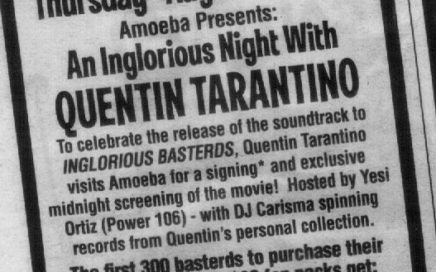
Quintin TThis is the first in a series of articles about relocating to Hollywood or New York to follow dreams in the entertainment business.

Part I—Writers.

If it’s not obvious to you, let me just state this clearly up front—this is not a question a beginning writer should be asking. In my opinion, the only people who should really be asking themselves this question are writers who’ve had some success with their craft. By “success” I mean that you’ve won awards for your screenplays or teleplays, you’ve gotten some type of representation, you’ve been optioned, you’ve produced your own plays or movies and have built an audience or you’ve placed in a film festival or writing competition. At the very least you’ve finished some writing program somewhere, have gotten feedback indicating you’ve got great talent and have written, edited and rewritten multiple screenplays. If none of these have happened, you may want to consider a move to either Hollywood or New York a bit premature—unless you’re moving here to go to school.

This section should be called Screenwriters. I called it Writers because the mass of the publishing business is based in New York. There are book writers who dream of moving to New York in the same way that Screenwriters dream of moving to Hollywood.  But unless your goal is to write for TV News or to be an editor at a publishing house, there isn’t much need for you to relocate to New York. Book writing and journalism isn’t really considered part of the entertainment world even though it most definitely is—evidenced by the lines blurring more and more every day. Nonetheless, book writing can be done from anywhere and emailed to editors and publishers around the world. If you need to take a meeting as a book writer, a teleconference or a day trip will usually suffice.

Screenwriting is a bit different.

Screenwriters’ options for if and when to move depend on whether they want to write for film or TV.

TV writers pretty much need to be local to where they work. TV writing is a collaborative effort. TV is run by writers (producers in TV are also the senior writers). The rigorous schedule of putting out weekly or daily shows requires teamwork. Teamwork requires the team be together. Different teams work different ways. Usually the writing staff meets and brainstorms the direction of the show. If the show has a strict bible (show plan or series arc) then the teams determines how far the show will move this season and may assign individual writers to write specific episodes based on the input/pitches from the whole staff. Writers may then get to work on their show for the most part, but still must participate in the rest of the show writing and development as necessary.

Most TV shows don’t have that strict a bible or are episodic. Shooting schedules demand quick writing and more minds equals more ideas faster. TV writers are salaried employees that generally work 60 hour weeks and more. On top of that, they must be there even after the scripts are written to make changes even during filming.

If a show is episodic, individual ideas for shows can be pitched and planned by the show runner. In the case of episodic shows, there is more of a chance the writer will not have to be in the room every week. The main writing staff must be present, but it is possible for episodic shows to produce a screenplay by a writer who does not live in the city. It is, however, unusual and unlikely.

Finally, if you’re writing a daily show—such as a news show or Tonight Show, etc. It would be impossible to be a regular writer without being in the room. In that case, you could live elsewhere only if you serve as a writer of a special segment.

Film writers have more options. If you chose to be a spec writer (one who writes original screenplays, then offers them for sale to production companies), you can do that much the same way as novel writers. You are free to live anywhere you like and send your screenplays in to agents, managers, producers or whatever contacts you might have in the industry. No one cares if you send your script from a cabin in Vermont or from Sunset and Vine.

If, however, you desire to be hired as a screenwriter—the predominate form of film screenwriting employment—you benefit from being in Hollywood because you have to take meetings to get those jobs.  Still, before Hollywood will consider you for employment as a screenwriter on a film, you will need to have an agent. To get an agent you need a spec screenplay. And spec screenplays, as I mentioned above, can be written anywhere. So unless you’ve garnered an agent from the quality of your screenplay, and your agent is ready to get you working in TV, you do not yet need to move to Hollywood. And if you have gotten an agent and he has meetings set up for you at Warner Bros tomorrow, you might still want to fly in for a week, take a bunch of meetings and see how they go before you take the plunge. It is actually easier, in many cases, to schedule meetings if you are known to only be available for a period of time.

Here’s a final thought on this. One thing I Wish I Knew (or WIK, as I call these ideas in the book) is this: WIK #20: It may well be that what inspires you to write is native to your hometown and not to Hollywood. Do you get that?

I moved to Hollywood from Chicago. In Chicago, the change of season, the rain, the snow, the oppressive heat, the big urban jungle, the roar of the El Train—the essence of Chicago—inspired and informed the writing that landed me an agent in Hollywood. All those inspirations disappeared when I moved to L.A. The perpetual sunshine, beautiful weather, palm trees and flowers did nothing to help me conjure up the harsh images I’d penned before. That’s another thing to keep in mind before you move. If your family gatherings or your crazy neighbor helped your pen those great stories, what happens when you’re not there anymore?

On the other hand, L.A. or New York can spawn new inspiration—at least that’s what the title of my book suggests. And as the photo at the top of this article confirms, there aren’t too many other places where you can watch Inglorious Basterds with Quentin Tarantino.

Good Luck

Next article will take a look at when an actor should move to Hollywood.

TRL

Comments (4)

Tags: , , , , , , , , , , , ,

Do I Need to Move to Hollywood?

Posted on 13 October 2009 by TRLocke

movingWith a book entitled “What I Wish I Knew Before I Moved to Hollywood,” it is inevitable that I would get asked that question. After all, is it really necessary to move to Hollywood to be involved in the entertainment business?  Johnny Depp  lives in France. Morgan Freeman lives in Mississippi. Robert De Niro lives in New York along with many other actors, directors and writers.

It’s pretty common knowledge that the entertainment business has two homes—one on each coast. Both New York and Los Angeles are home to nearly every national television show (excepting Oprah) and both also are home to the majority of Film, Music and Dance production. So perhaps the question is more fairly worded to include both cities. Of course, my book is named as it is because I moved to Hollywood, but the truths in it apply to both places. So…

“Do I need to move to either Hollywood or New York if I want to be in the entertainment business?”

The answer depends on which aspect of the entertainment business you wish to enter. What I want to do with this topic is break down the answer into separate blogs. So over the next few days I will address this question and share insights from successful Hollywood players for each of the following fields: acting, writing, directing, film producing (including crew), dance, music production (including singing/rapping, etc), comedic performance, and representation.

If you or anyone you know is considering whether to move to Hollywood or New York or wondering if you’re ready to take that next step, please check out the blog over the next few days for some insights that might help make that decision a little clearer for you.  My goal is to save you a lot of pain and time by helping to you to be sure that, if you do come to Hollywood or New York, you’ll be ready and you’ll know more of what to expect. Please bookmark, subscribe to the RSS feed above, or share on your networks to let others know about this series. Thanks.

First up tomorrow… Writers.

TRL

Comments (1)

Tags: , , , , , , , , , , , , , , , , , ,

8 Essential Keys to Acting Success!!!—What One Star Says Actors Need to Know

Posted on 08 October 2009 by TRLocke

AwardOscarHere are some statistics you may not know—there are 120,000  SAG (Screen Actor’s Guild) actors in Hollywood. At any given time 85% of them are out of work. The average salary of a SAG actor is less than $10,000 a year.  Most of them are just trying to earn the required $7,500 a year to keep their health benefits. 18-20% of them fall into star roles and make serious money.  But less than 1% are the ones you read about and know, the real stars, the actors who make million dollar and double digit million dollar salaries.

One of the actors I interviewed for my book, “I Followed My Bliss to Bankruptcy—What I Wish I Knew Before I Moved to Hollywood” earns a reported $250,000 per week for his considerable skills learned through his years of experience. Most of those years passed with barely a livable wage from his craft.

“For one period of time, about three years, our family survived because on my wife’s income. She was out working while I cared for our child. You can start to question what you’re doing wrong and what’s going on. I would do well on an audition, but couldn’t get to the next level.”

Three years. Things have only recently changed.

“I got a stint doing recurring roles here and there. I have friends who became huge stars very shortly after arriving here. We worked together in New York doing Broadway. We came out here together and acting success happened for them much quicker. It just took longer for me. Other very talented friends still have not broken through.”

And that’s how it is. Some make it right away and others labor on for years.

In my book, I chose to interview celebrities and successful Hollywood artists to see what they knew that others who hadn’t succeeded did not.  They knew what it was like to succeed and they understood the demands on the life of a successful actor, writer, singer, producer, director, etc. I chose to interview them anonymously because I wanted them to feel free to be completely honest–neither afraid of hurting someone nor being retaliated against by someone later.  (In hindsight, I could sell a lot more books if I hadn’t promised that anonymity, but I believe the honesty gained improves the quality of the information.)

One thing they all agreed it took to succeed was a tenacious unwillingness to quit.  The realities can be pretty grim for artists in Hollywood. Here one is surrounded by the successful, the wealthy; the ones with the power to make movies, music, or headlines everywhere they go. It might sound glamorous to tell your friends you were on set today with Megan Fox or Will Farrell, but when the difference between what they are paid to be there and what you are paid to be there is millions of dollars, and your not sure if you will be able to pay your rent tomorrow, it can be hard to bite the bullet and keep pushing forward towards your acting success. Hope, in Hollywood, is a skill set you must possess.

Acting success also doesn’t come to those who can’t take rejection. Rejection for an actor can feel very personal. After all, it is the actor who stands before the casting director speaking her lines. It is this same actor who then hears “Thank you!” in the middle of her sentence and is escorted out past the next young thespian who looks enough like her to be her sister. According to this TV star, acting success is about business and rejection is part of the business.

And contrary to oft taught belief that success in Hollywood is all about who you know, according to this star,

“It’s not really about who you know, but being in the right place at the right time. It’s about being steadfast. You come in, do the job. Most people who make it are just lucky. They have the look the casting director is looking for—so the casting director takes whatever talent the actor has. Most times what the actor has lends itself more to celebrity than to talent.”

That explains a lot. When he first arrived in Hollywood, this actor counted among his fans the hugely successful TV producer Steven Bochco (Hill Street Blues, NYPD Blue, LA Law). Although that relationship led to occasional roles on Bochco’s shows, it didn’t lead to constant employment or stardom.  This actor’s journey in Hollywood went from bit part to small recurring role for nearly 20 years before he finally had “the look.”

That quote might even explain why many get into the business of acting—seeing some actor in a movie and thinking, “I can act better than that.” That may be true, but will you be at the right place at the right time? One thing is clear, the more auditions an actor goes on, the more chances she has for making it eventually.

Here’s another great nugget of truth he shared,

“L.A. is not really about acting. TV is a producer’s medium. Film is a director’s medium. Actors have no real control. Sometimes you do a take and you think you did it well and the director wants you to do again in a different way. So you do. They may use the take that isn’t how you wanted to do it. But it’s their decision. Once you understand and know your place, you’re cool.”

Who would have thought that? A director, no doubt. Of course film is the director’s medium. That why director’s get to call it “a film by” and get their names above even star’s names. Yet it’s unlikely an actor would expect to have his best work discarded because the director or producer preferred the take where the actor looked less than his best.

The interview with this great and wise talent went on for much more in the book, but the last piece of advice I’ll share from him here now is this:

“Young actors don’t realize this, but acting is one of the most unglamorous jobs there is. It’s one of the most fickle. There are some great rewards, but this is a business. The things you think they look at, they don’t. It’s really a war of attrition. You stick around long enough, you’ll work. If you come here looking for all the perks and accouterments, then you’re in it for the wrong reasons because you really have no control over those things.”

Great truth to keep in mind as you look for your acting success in Hollywood.  For more from this and other interviews with successful writers, directors, actors, singers, film and record producers, to help save you years of frustration and to encourage you on your Hollywood journey , please check out my book. I guarantee you’ll be glad you did.

Good Luck.

T.R. Locke

Comments (4)

Tags: , , , , , , , , ,

Screenwriter On Why He Won’t Read New Writer’s Scripts

Posted on 21 September 2009 by TRLocke

The article is important because it was written by an Oscar-nominated screenwriter, Josh Olson, and has a lot to say about different people’s  attitudes towards novices trying to break into screenwriting.

The point the author makes that sticks most with me is simply that if you’re going to ask for feedback, be ready to receive it. He argues that the careful feedback he gave wasn’t appreciated by the new writer. The writer seemed to be looking for a pat on the back or some other form of affirmation more so than true honest feedback. My first entry in this blog was called “Develop a Thick Skin.” That is true of all aspects of life in Hollywood. Hollywood judges artistic creativity on a daily basis. Whether someone is shooting holes in your perfect story, or yelling “Next” as soon as you flash your brilliant smile, rejection and criticism is part of the game.

But there’s another point the comments make that’s worth remembering as well. Josh spoke authoritatively on his own convictions about  reading screenplays. Those are his opinions. If you read the comments, you’ll notice a lot of people agree–they hate reading scripts too.  But hundreds of other writers disagree, including a number who’ve written their own blogs in response such as Franzine Kafka, and the screenwriter over at Hollywood Roaster. Once again the law of averages is in play. The simple truth is if you keep knocking on enough doors eventually one will open.  Josh may not read your script, but there are tons of producers, writers, directors and agents who will.

Comments (11)

Tags: , , , , , , , , , , , , , , ,

Michael Jackson and the Dark Side of Hollywood

Posted on 02 July 2009 by TRLocke

Dark Side of HollywoodIt was reported last night on NBC news that a source close to Michael Jackson said the superstar was so distraught about being forced to do fifty concert dates in London, instead of the ten he wanted to do, that he may have accidentally killed himself through an overdose while trying to make himself too sick to carry out the contract.

The mere accusation of such a disturbing possibility shines a light on the reality of the dark side of Hollywood. When people talk about Hollywood, they are generally talking about the entire world of entertainment. Entertainment to the average person is fun-movies, music, dancing, television, sports, live theater, magic. It’s all the great stuff we pay to see or do because our participation takes us away from our day-to-day.

But for those who are the creators and producers of entertainment, a better term might be “Show Business.” There is the show. And there is also the business.

Michael Jackson loved the show. The same source on NBC reported he could talk about old movies, dance moves and music for hours, but when it came to negotiating contracts and the legal technicalities, MJ took a much dimmer view. Most artists do likewise.

That’s why Hollywood is full of people who make the business side of show business happen-agents, lawyers, producers, promoters, marketers, advertisers, accountants, banks, corporations, distributors, publicists, secretaries, assistants, drivers, construction workers, electricians…

For an artist, Michael Jackson was a very shrewd and intelligent negotiator. He was one of the first artists to maintain ownership of his own masters and publishing rights to his music (something Paul McCartney actually advised him to do). MJ took the advice so seriously that he also purchased the rights to half of the Sony music catalog that controls the Beatles music as well.  No doubt this shrewdness grew out of the massive experience of Michael Jackson’s 45-year career and having been on the short end of negotiations early on.

But just because Michael was good at negotiating doesn’t mean he enjoyed it. Most artists don’t. The vision artists have of coming to Hollywood might include getting rich, but it rarely includes the minutiae and details required to actually make getting rich happen. Artists usually just want to be discovered-to have the chance to make their living doing something they love. They’ve seen the money come for others and they hope it will come for them, too, but someone else usually handles that. And that someone else gets rich too. Very rich. And usually that someone else is much more powerful than the artist-no matter who that artist is.

When the artist (the show) and the people running the business of that artist are in sync, Hollywood is at its best. Great art can be produced and the world can get to enjoy it. The artist grows wealthy and famous and the money flows. But when the artist and the people running the business of that artist get out of sync, lawsuits, threats, drug addiction, depression, sickness, exhaustion, confusion, disappearances, bad artistic products and even death occur.

This is the dark side of Hollywood. It’s what awaits every artist who comes here. Whether the artist falls victim to this dark side or not, he will certainly face it. Eventually, the artist, whose art most freely flows from his own willing creativity, will find himself being forced to do something he doesn’t want to do because it interferes with the business side of his show.

Business people don’t really understand what it takes to create art. They’ve studied a system of rules, formulas, legalities, educated guesses and leveraged hunches to determine what they believe (or sometimes know) will create money. So as an artist, if your lyrics, your story, your jokes, your self-expression, your movie ending, your energy level, your friends, your family, your desire to try something new, your vision, your look, your new wardrobe, etc. doesn’t jib with their scheduling, market testing, product lineup, distribution policy, Asian market strategy, image consultation or calendar, etc., you’ll find yourself confronted with the dark side. And in the worst cases, that dark side cannot only kill your art, but it can kill you.

The dark side of Hollywood reminds me a bit of that that old fable of the goose that laid the golden eggs. The man takes and kills the goose in order to more quickly get at all the golden eggs inside. In the fable, there are no eggs inside the dead goose. The man learns his lesson about greed and patience and caring for precious possessions. The goose must keep living, be healthy, and take his good time to produce golden eggs one at a time. But in Hollywood they can kill the goose that lays the golden eggs and no longer get the new eggs, but instead sell Golden Goose t-shirts, make Golden Goose movies, sell GG collectibles, copies of other eggs, commemorative special edition DVDs of the Goose’s Best Golden Egg Lays, televise gala events of famous people talking about their Golden Goose experiences and sell advertising spots, play old Golden Goose movies and, of course, dress up a duck in goose feathers, paint some eggs gold and shove them up the duck’s ass-the people won’t know the difference when they pop out.  Now, instead of one Golden Goose, there are twenty-all aimed at different markets, all saying and doing exactly what the surveys and market research says they should.

The dark side of Hollywood is that any artist, any art is first and foremost a product to sell. It’s one thing when the product being sold is a machine, a coffee cup, a wallet or a car. Such things can be marketed at will or disposed of without much consideration if it doesn’t sell well. It might seem another thing altogether when what’s being sold is a human being-his thoughts, ideas, dreams, visions…his music. But in Hollywood there is no difference.

Comments (8)


 Powered by Max Banner Ads 
Advertise Here
Twitter
Learn Guitar Today
Satellite Direct TV
Bookstore
Advertise Here

Sponsored Links

Facebook
Mad About Manga
Best Tattoo Designs
Arrt Photography
Satellite Direct TV

RSSTweets @TRLocke

What's Going On Inside:

RSS Deadline Hollywood

  • President Obama Visit Breaks Ratings Records For 'The View'; 6.6 Million Tune In July 30, 2010
    Yesterday's much-hyped edition of The View with President Barack Obama drew the largest audience ever in the history of the ABC's daytime talk show. The program, which also featured the return of co-host Barbara Walters from heart surgery, was watched by 6.6 million viewers. The View's previous audience record was 6.2 million, logged on the da […]
  • EMMYS: Writers For Variety/Comedy Series Invited Back To Primetime Emmys ...Sort Of July 30, 2010
    EXCLUSIVE: Writers on TV's late-night comedy shows are still angry at the news that for the first time their category won't be part of the Primetime Emmy telecast. Instead, as part of last year's agreement between the TV Academy and Writers Guild, their category will be presented at the Creative Arts Awards the week before. Now those same scri […]
  • Richard Branson Venture's Virgin Film Has Raunchy Laughs, Lotta Stars July 30, 2010
    The first film that gets Richard Branson's Virgin Produced film shingle off the tarmac--it was innocuously mentioned as an untitled Peter Farrelly film in the announcement of Branson's joint venture with Ryan Kavanaugh's Relativity--has a bigger concentration of first class cabin-caliber actors than any under-$8 million film I can remember. An […]

Box Office Numbers

Sponsored Links