Tag Archive | "Hollywood Jobs"

Tags: , , , , , ,

Q&A: “Will Hollywood Reject Me for my Political Views?”

Posted on 04 November 2009 by TRLocke

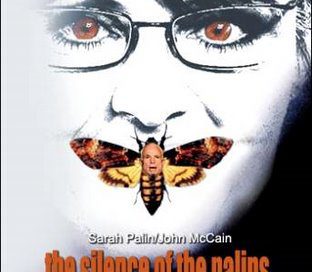
palin-silenceI received a question on my blog from a filmmaker and reader of my book. I’d like to answer his question in this post. For those who don’t know, in my book, I refer to the things I Wish I Knew before I moved to Hollywood as “WIKs”. The question is as follows:

Mr. Locke,

I just had a quick WIK question and I would be grateful if you could take a sec to answer it.  The political climate of Hollywood is far-left to left.  When I move there, will I be blacklisted or in any way discriminated against if I have a believe [sic] in or espouse in a different political ideology than from what currently dominates?

Thanks,
Charles

Excellent question, Charles. My answer is no. Here’s my thinking and belief. This business is really all about the dollars. If your idea has an audience and can make money, it really doesn’t matter what you believe.

Consider this for a minute: Hollywood can be understood to be anything that concerns the media. When you talk about celebrities of any ilk, they are represented by agents here in Hollywood. That means Glen Beck, Rush Limbaugh, Bill Oreilly–they all have Hollywood agents. They are all TV/Radio celebrities and you can’t get much more right wing than they. But not just them, nearly everyone you see anywhere representing any view (including many politicians) have agents in Hollywood. It’s how they get their shows negotiated and their book deals, etc. If money is coming, Hollywood doesn’t care what side of the fence it comes from.

Second, consider this: Hollywood tends to make far more conservative movies than liberal ones. That might sound a bit crazy to you, but think about it. Do you see more movies about war, fighting, and getting rich or about saving the forest, everyone getting along and sharing? Liberal stuff is simply not as dramatic. That’s just a fact. Far more movies are about national pride and willingness to die or kill for country, family, or honor. You could probably pitch an idea called, “Sarah Palin Saves the World” where you have the former Alaska governor flying around in a Huey sniping terrorist and clubbing baby seals. If you can show there’s a big enough audience to make a profit doing so, someone in Hollywood would be willing to make it. Okay, maybe not with clubbing baby seals, but clubbing terrorist, sure–especially if the female lead shows a little skin. For the right price you might even get the genuine article herself—check with her agent.  Remember Hollywood was torturing terror suspects long before Gitmo.

I just saw a report on TV that talked about how militarism is still so much alive in Hollywood. It’s very true. Militarism sells tickets.

Finally, I don’t think Hollywood is really, down inside, as liberal as it’s made out to be. As I said, it’s all about the dollars. Hollywood is notorious for typecasting, stereotyping and pigeonholing anything they can’t immediately see a big market for. They make vampire and sex films, not because they believe in vampires and sex, but because there’s a huge market for it right now. If the market disappears, Hollywood will dump vampire production faster than you can vote down universal healthcare.  Tyler Perry has proven there is a market for African-American films, but judging from production, Hollywood still seems to be hesitant to trust anyone to make one except him.

So to answer your question, no I don’t think you’ll be discriminated against for espousing a different political view—namely because I’m not sure your view is different.  Remember the current governor of California is an actor—and a republican (Schwarzenegger). So was Regan before him.

I will say this though; you will have trouble getting any actual political movie made. Political movies don’t do well in general unless they are a few generations removed. But Hollywood might be happy to put your ideas on radio, TV and books, because in those media, politics sell like hotcakes.

Hope that helps.

TRL

Comments (8)

Tags: , , , , , , , , , , ,

When Should Singers/Musicians Move to N.Y. or Hollywood?

Posted on 21 October 2009 by TRLocke

050609_SM_hustleFlow_Ex

This is the third in a series of articles about relocating to Hollywood or New York to follow dreams in the entertainment industry.

Part III—Singers/Musicians

When should a singer or musician move to Hollywood or N.Y? It’s a good question. And what’s interesting about this one is we’ve finally gotten to a category of entertainment that has a nationwide televised contest that actually tries to answer that very question.

American Idol has come a long way towards helping us understand what the music industry is looking for when they look for singers to turn into stars. Of course talent is necessary, but it’s not the only thing. The vast majority of singers who progress to the final rounds are those who have already had success on the local level. They’ve learned how to perform before an audience, they know who they are—their style, their range, their genre—and by the time they are on the show, they look as comfortable as any star performing on the Grammys.

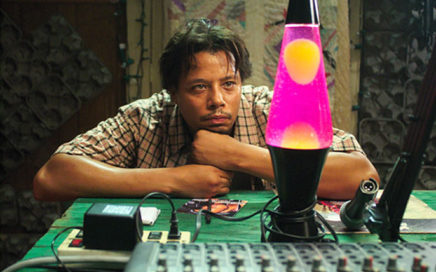
Musicians and singers have more outlets for their talent than other performance artists. A band or a singer can set up in a bar, a coffee house, a church or even all three any night of the week. And if they’re good, they’ll get paid, too. They can rent a hall and throw a concert any time they like. They can also pull a “Hustle and Flow” and set up a studio in any room lined with egg crates, pillows and blankets to record the next number one hit to sweep the nation. That’s because music has the simplest and cheapest distribution system available today. Any artist anywhere can easily record and fully produce a song on his computer using software that’s either free or cheap and get audibly the same quality many studios turn out.

After musicians create a song, they can then post the file on MySpace, Amazon or any of a dozen or more other sites and watch it sell around the world. They can even film their own viral music video and release the song through YouTube.

So when should a musician or singer move to Hollywood or New York? This one is simplest of all to answer. They shouldn’t. Stay where you are. Do your thing locally and put your stuff out online and independently. Hollywood will notice you when you’re ready and they will come to you.

Why? Well, the fact of the matter is that you have much better chance of being able to get on a stage in your hometown than you do in Los Angeles or New York. Besides that, in your hometown you already have fans. And it’s those fans who will be your most loyal customers even after you become a nationwide sensation. It’s those people you will need to help boost your popularity worldwide—to run your fansites, to brag about you on social networking sites. Hometown fans are so strong because they not only are supporting you, but they are supporting where you come from. They are representing your town to the world. You help put each other on the map.

And that’s another reason you don’t want to move to N.Y. or Hollywood. You aren’t from there. Music tends to have this local loyalty that’s much stronger than other art forms. I mean, there are New York writers, but nothing compares with the kind of slavish loyalties that music fans have.

Consider this: Jay-Z is from New York. He’s loved around the world, but he is worshiped in Brooklyn. He didn’t move to New York, he grew up there. His music is as culturally and lyrically linked to New York as Snoop’s is to L.A., and as T.I’s is to Atlanta.   Similarly Dave Matthews Band blew up in Virgina and released their album independently before sweeping the world. The same story is repeated for country, rock, and rap stars all across America. Blooming where you were planted is the rule in the music industry, not the exception. If you bloom big enough, Hollywood and N.Y. will take notice. At that time, they may call you to move. That’s when you may want to consider it.

One of the artists I interviewed in my book is a multi-platinum hip hop producer that I’ve known for years. His story is that he moved to Hollywood only because one of his friends got a contract with Death Row Records back in the 90s. Death Row found his friend in Atlanta and brought him to L.A. This artist went along. And because he was always hanging out at Death Row helping produce beats for free, he too eventually got offered jobs. So I concede there is one other time when you might want to move to N.Y. or L.A.—when you have a friend who gets a contract with a major label and wants you to come along.

But even when Hollywood takes notice, it doesn’t mean you need to move. Many producers and musicians, like writers, find their hometowns to be greater sources of inspiration for their art. Flying out to meet with other artists or agents in the industry centers will usually suffice. Keeping connected to your roots helps you stay authentic. There is nothing worse for an artist than to lose his authentic self-expression. An artist who does so risks losing the very thing Hollywood seeks to exploit to make him a star.

With all the options for performing, recording and releasing music that exists today, there is no sensible reason for any musician to move to Hollywood unless invited.

Please tell me what you think. Do you agree? Disagree? Have questions? Please share from your experience in the comments below and share this article with others. Also look for my next article on Directors and Producers in the next few days. And please check out my book for all the advice from my producer friend as well as great insights from gold-selling and Grammy nominated singers and songwriters and many other successful celebrities.

Good Luck,

TRL

Comments (7)

Tags: , , , , , ,

I’m an ACTOR… Should I Move to New York or Hollywood?

Posted on 16 October 2009 by TRLocke

hitchhikerThis is the second in a series of articles about relocating to Hollywood or New York to follow dreams in the entertainment business.

Part II–Actors

If you’re an actor and you’re wondering whether it’s time to move to New York (the home of live theater and a decent amount of film production) or Hollywood (the home of most film and television production), you might want to consider a few things.

In a blog I wrote last week, I detailed information I learned from one of Hollywood’s top stars whom I have the honor of knowing and thus interviewing for my book. Consider these business facts:

  • There are 120,000 SAG (Screen Actor’s Guild) actors in Hollywood.
  • At any given time 85% of them are out of work.
  • The average salary of a SAG actor is less than $10,000 a year.
  • Most of them are just trying to earn the required $7,500 a year to keep their health benefits.
  • 18-20% of them fall into star roles and make serious money.
  • Less than 1% are the ones you read about and know, the real stars, the actors who make million dollar and double digit million dollar salaries.

The actor I interviewed falls into that last group—earning $250,000 an episode for his role in a hugely successful show. He’s one of the lucky ones. But it took many years for him to get to that point.

The question that is perhaps most important in making this decision is whether the move will afford you greater opportunities than it will cost you to do it.  Here’s what I mean:  It is obvious that there are many more auditions being held in Los Angeles and New York than in Baltimore, Cleveland, Tampa, Salt Lake City and perhaps the rest of the country combined. But what might not be so obvious is whether that translates into a better shot at becoming the actor you want to be. It would seem it should. But consider this:

  • There are many more actors competing against you for that very reason.
  • Because there are so many actors, there are gatekeepers set up in L.A. and N.Y. to block many newbies.
  • Many of the actors competing against you have far more experience than you may have.
  • If you don’t have an agent (most new actors in Hollywood/N.Y.  don’t), you may not even hear about the auditions for your type.
  • It will cost you far more money to wait for your chance in N.Y. and L.A. than any other place in the country.

Again, I’m not writing this to pour water on your fire. I’m writing this because I believe, as one quote says, “The best way to achieve your dreams is to wake up.” By wake up, I mean recognize the realities of the world you are looking to enter. Too often young actors are lured to Hollywood with dreams of becoming the next Will Smith or Jennifer Aniston. They are lured by the glamour of the less than 1% of actors who enjoy such glamor. Not many have their hearts set on even being one of the 18-20% group—those actors whose faces you may recognize, but whose names you don’t know.

It’s much easier to be a big fish in a small pond. One thing for sure about Hollywood, here you are swimming in the Ocean. Before you move here, make sure you’re ready for the salt water and sharks.

How do you do that? You get big in your town first. You find the theater groups that are active where you live and get involved. If you live in a very small town, you might want to move to a city near you to expose yourself to more opportunities.

Most actors considering a move to New York or Hollywood should have already done these things. If you have succeeded in those smaller ponds, move up to a lake. There are many acting opportunities in larger cities like Las Vegas, Orlando and Chicago. You may want to cut your chops in those large cities first. Doing so will get you used to the process so that, when you do get your shot in L.A. or N.Y., you’ll know better what to do to win the role.

But say you’ve done that as well. Let’s say you’re going to get a roommate (or two) and make the costs of living in one of these cities as cheap as possible. What’s the benefit of moving to N.Y. or L.A? Mmm…?  Maybe sharing my story would illustrate it best.

Here’s the set up: I moved to L.A. with my family after placing as a semifinalist the Chesterfield screenwriting contest, getting an offer to purchase my screenplay, and attaining representation as a screenwriter. At our new apartment in Burbank another couple had moved here in support of their son’s acting career. He’d won a major talent contest in New Mexico, had gotten an agent and booked a few TV shows and movies. The mother had just taken a job as an agent with her son’s talent agency.

Within two months of being here, while chilling in the hot tub by the pool, the mother asked me if I’d ever done any acting. As it so happened, I’d been the star of nearly every high school play we’d done from my sophomore year forward. She said she’d like to rep me, my wife and daughter as actors because she believed we’d book a lot of roles. I thanked her, but said “no.” I was focused on writing.

My wife and daughter, however, said, “Sure! That sounds cool.” Soon they were in movies—The Italian Job, The Hulk, Legally Blonde;  commercials for Time/Life, Rent-a-Center and others, and making decent money while hanging out with the likes of Mark Walhberg, F. Gary Gray and Mekhi Phifer—all without having taken a single acting class or having any experience at all. Once my wife took a few classes, she booked more work. After two years of being asked, I finally said, yes. Before long, I too was booking commercials for Time/Life, Papa Johns and others and going on auditions for movies and TV shows including Stargate Atlantis, CSI,  and ER.

My point is that none of us had any intention of being actors, yet we fell into it in Hollywood. However, none of us are famous, nor have we made a career of acting as the less-than-1-percent actor I mentioned above. He too fell into acting—in college—in a small town. He moved to medium city—got big there in the local theater groups, then moved to N.Y. where he did Broadway and off-Broadway shows. Finally, he moved to L.A. where he struggled for nearly 20 years before he became a less-than-1-percenter. But he succeeded at making a career of it because when he got to L.A., he knew the game thoroughly. He pursued his dreams wide awake and understood it might take many years. He was ready to swim in the ocean.  The question is, are you?

Now tell me what you think. Do you agree? Disagree? Please share from your experience in the comments below and share this article with others. Also look for my next article on Singers and Musicians in the next few days and please check out my book for the complete stories and all the other advice from this actor and many other successful celebrities.

Good Luck

TRL

Comments (15)

Tags: , , , , , ,

8 Essential Keys to Acting Success!!!—What One Star Says Actors Need to Know

Posted on 08 October 2009 by TRLocke

AwardOscar“Here are some statistics you may not know—there are 120,000  SAG (Screen Actor’s Guild) actors in Hollywood. At any given time 85% of them are out of work. The average salary of a SAG actor is less than $10,000 a year.  Most of them are just trying to earn the required $7,500 a year to keep their health benefits. 18-20% of them fall into star roles and make serious money.  But less than 1% are the ones you read about and know, the real stars, the actors who make million dollar and double digit million dollar salaries.” –From I Followed My Bliss to Bankruptcy–What I Wish I Knew Before I Moved to Hollywood pg. 208

The star I interviewed for my book, which gave me the facts above, earns a reported $250,000 per week for his considerable skills learned through his years of experience. Most of those years passed with barely a livable wage from his craft.

“For one period of time, about three years, our family survived on my wife’s income. She was out working while I cared for our child. You can start to question what you’re doing wrong and what’s going on. I would do well on an audition, but couldn’t get to the next level.” –page 209

Three years. Things have only recently changed.

“I got a stint doing recurring roles here and there. I have friends who became huge stars very shortly after arriving here. We worked together in New York doing Broadway. We came out here together and acting success happened for them much quicker. It just took longer for me. Other very talented friends still have not broken through.”

And that’s how it is. Some make it right away and others labor on for years.

In my book, I chose to interview celebrities and successful Hollywood artists to see what they knew that others who hadn’t succeeded did not.  They knew what it was like to succeed and they understood the demands on the life of a successful actor, writer, singer, producer, director, etc. I chose to interview them anonymously because I wanted them to feel free to be completely honest–neither afraid of hurting someone nor being retaliated against by someone later.  (In hindsight, I could sell a lot more books if I hadn’t promised that anonymity, but I believe the honesty gained improves the quality of the information.)

One thing they all agreed it took to succeed was a tenacious unwillingness to quit.  The realities can be pretty grim for artists in Hollywood. Here one is surrounded by the successful, the wealthy; the ones with the power to make movies, music, or headlines everywhere they go. It might sound glamorous to tell your friends you were on set today with Megan Fox or Will Farrell, but when the difference between what they are paid to be there and what you are paid to be there is millions of dollars, and your not sure if you will be able to pay your rent tomorrow, it can be hard to bite the bullet and keep pushing forward towards your acting success. Hope, in Hollywood, is a skill set you must possess.

Acting success also doesn’t come to those who can’t take rejection. Rejection for an actor can feel very personal. After all, it is the actor who stands before the casting director speaking her lines. It is this same actor who then hears “Thank you!” in the middle of her sentence and is escorted out past the next young thespian who looks enough like her to be her sister. According to this TV star, acting success is about business and rejection is part of the business.

And contrary to oft taught belief that success in Hollywood is all about who you know, according to this star,

“It’s not really about who you know, but being in the right place at the right time. It’s about being steadfast. You come in, do the job. Most people who make it are just lucky. They have the look the casting director is looking for—so the casting director takes whatever talent the actor has. Most times what the actor has lends itself more to celebrity than to talent.” –page 207

That explains a lot. When he first arrived in Hollywood, this actor counted among his fans the hugely successful TV producer Steven Bochco (Hill Street Blues, NYPD Blue, LA Law). Although that relationship led to occasional roles on Bochco’s shows, it didn’t lead to constant employment or stardom.  This actor’s journey in Hollywood went from bit part to small recurring role for nearly 20 years before he finally had “the look.”

That quote might even explain why many get into the business of acting—seeing some actor in a movie and thinking, “I can act better than that.” That may be true, but will you be at the right place at the right time? One thing is clear, the more auditions an actor goes on, the more chances she has for making it eventually.

Here’s another great nugget of truth he shared,

“L.A. is not really about acting. TV is a producer’s medium. Film is a director’s medium. Actors have no real control. Sometimes you do a take and you think you did it well and the director wants you to do again in a different way. So you do. They may use the take that isn’t how you wanted to do it. But it’s their decision. Once you understand and know your place, you’re cool.”

Who would have thought that? A director, no doubt. Of course film is the director’s medium. That why director’s get to call it “a film by” and get their names above even star’s names. Yet it’s unlikely an actor would expect to have his best work discarded because the director or producer preferred the take where the actor looked less than his best.

The interview with this great and wise talent went on for much more in the book, but the last piece of advice I’ll share from him here now is this:

“Young actors don’t realize this, but acting is one of the most unglamorous jobs there is. It’s one of the most fickle. There are some great rewards, but this is a business. The things you think they look at, they don’t. It’s really a war of attrition. You stick around long enough, you’ll work. If you come here looking for all the perks and accouterments, then you’re in it for the wrong reasons because you really have no control over those things.”

Great truth to keep in mind as you look for your acting success in Hollywood.  For more from this and other interviews with successful writers, directors, actors, singers, film and record producers, to help save you years of frustration and to encourage you on your Hollywood journey , please check out my book. I guarantee you’ll be glad you did.

Good Luck.

T.R. Locke

Comments (6)

Tags: , , , , , , , , , , ,

Comments, Questions and Answers

Posted on 29 May 2009 by TRLocke

Cover

Hey!

Thanks for dropping by. Whether or not you’ve read my new book,  I Followed my Bliss to Bankruptcy–What I Wish I Knew Before I Moved to Hollywood, I invite you to make comments or ask questions about Hollywood or the book here.

Your questions aren’t limited to the book. If there’s anything you want to know about the business of Hollywood, I’ll do my best to answer it–and if I can’t, I’ll find an expert who can. I also hope to begin posting blogs, vlogs and interviews in the other section called, “Making it in Hollywood.” Check back often or even join, to get more information and advice from successful guest contributors.

Thanks,

T. R. Locke

Comments (3)

Tags: , , , , , , , , , , , ,

Tip #1 For Making it in Hollywood–Thick Skin

Posted on 28 May 2009 by TRLocke

Mmm. The first real tip. Let’s see. How’s this…?

Thick Skin

Develop a very thick skin.

I just happened to see the job listings from UTA (United Talent Agency). The job listings are supposed to be internal openings that agents and their assistants browse to learn what production companies, or their own clients, are looking for in terms of support staff. Most of the listings are for agent assistants, celebrity assistants, interns/trainees and other lower-level studio executives. They are the kind of jobs many people who come to Hollywood hope to land in order to get a foot in the door.

These lists get swiped and passed around through email. Join almost any creative support group and you’re likely to come across one or more from a major agency. They all have them. And some of the jobs pay decent wages, too. You can be a celebrity assistant for instance and earn “$48K/year–no benefits.” However the reply link was via a country music company, so it might not be enough money.

What traits do many of the jobs look for? Well, along with, “must be willing to work flexible hours and be utterly committed to the job,” one very telling request was as follows: “Must have thick skin.”

What makes someone put that in a job posting? Not sure, but I would guess they lost their prior assistant because they cussed them out one too many times.

Thick skin. It’s not only good for assistants working for agents and celebrities, but it’s a must for any creative person who puts their talent up for judgment.

In fact, thick skin might be too soft a term–try armor plating. “Must have armor plating.” Armor is better than skin for repelling the knives that often fly at you. “Must be bulletproof.”

Whatever dreams you might have in Hollywood, unless you’re extremely lucky, you’ll encounter lots of rejection before you find it.  Not letting that rejection penetrate,  not taking the harsh comments to heart–letting them bounce off your thick skin will definitely help you stay on track and give you a better shot at reaching your goals.

Keep at it,

T. R. Locke

Please share these tips with your friends by clicking the Share This button below to send a link by email or recommend this post on your favorite social site.

Comments (3)

Buy My Book at Amazon
Buy at a Bookstore Near You
Script Coverage
Buy At Barnes and Nobel
Twitter
Twitter Followers

Follow T. R. on Twitter:

Follow @TRLocke on twitter.