Tag Archive | "filmmaking"

Tags: , ,

Filmmakers Use Free Web Software to Make National Commercial $$$

Posted on 11 March 2011 by T. R. Locke

In case you didn’t see the possibilities of the free filmmaking software from Xtranormal I wrote about in February of last year, I recently noticed a great use of it in a national commercial. A filmmaker used the software to create a simple commercial. Geico bought the commercial ($$$) and put it out nationally. Here’s a link in case you haven’t seen it. 
Comments (14)

Tags: , , , , , , , , , , ,

Lessons from DVD Extras–Getting Past the Cut

Posted on 14 May 2010 by T. R. Locke

One of the great places to learn lessons about Hollywood is the commentary section of DVDs.  It’s amazing the insights you can gain from filmmakers talking quite innocently about the process of getting the movie made. Sometimes the things they think they’re teaching you about the movie business aren’t what you walk away having learned. In fact, sometimes you can learn things they don’t really want you to know.

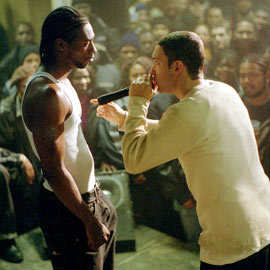
Just recently I watched 8 Mile—the Eminem bio film. The film is about rapper Eminem struggling to become a successful recording artist in Detroit by winning rap battles. It follows the exact same format that most “outsider young person struggles to find himself in a strange world” films (Step Up, Stomp the Yard, Drumline, Bring It) follow.

In the DVD extras, there is a section about filming the rap battles themselves.  Particularly, there is a story about how the film’s director and producers decided they wanted to have local rappers actually battle Eminem in order to get a more gritty realism.

The call goes out among the hundred or so extras who made up the crowd during the club and rap battle scenes. Three rappers, the ones who possessed the skills to top a real rap battle in the room, would then be put in the film as star actors featured battling Eminem. This was a chance of a lifetime for these actors who’d only been booked in very low paying extra jobs where their faces would likely never even be seen (see article on being an extra here). Here was a chance to be credited in a major motion picture, to have the camera right in your face and to be able to launch a career in acting.

Dozens of the extras tried out for the roles. Most were rejected out of hand, but quite a few showed promise. Eventually the contestants were whittled down and three lucky and talented ones were chosen. They were very talented too.

One by one, the rapper/actors/contest winners took their positions before Eminem to battle him. Although initially told to save his voice for the dialogue scenes and only to lip sync his comebacks against these rappers, Eminem couldn’t let the taunts in front of the packed room go unanswered. Impressively, true to his character in the film, he improvised clever responses to each rapper—clearly putting them in their place.

So what did we learn from this DVD extra? That Eminem is actually a very good rap battler? Yes. That’s what the film director wanted us to learn. But here’s what we learned that he didn’t want us to learn: After all of the contest—all of the hopes and dreams of each rapper in that room being placed before them—the promise of a starring role in a major motion picture. After winning the contest and being chosen as one of the three actors to battle the star; after filming the battle against Eminem and rejoicing, celebrating and telling all their friends and family about it; after the movie comes out six to nine months later, after all of the anticipation, after buying the popcorn and taking your seat in the theater….

Not a single one of those actors’ battles appeared in the film.  Every single one was cut. Every one. Those actors are not featured anywhere except in the DVD rap battle extras section. But at least they were featured there. Many actors find their roles, in fact, whole characters cut from movies. Where they expected a reel to show agents, managers, casting directors, or at least a credit for their resume, they may get nothing.

Some executive didn’t think the scene was necessary—one battle too many. Or it didn’t work—the lighting was bad, etc. For whatever reason, the film you starred in you no longer star in. The film goes on to be number one at the box-office—oh well, at least it got released. Hundreds of movies get filmed that never even get released.

Welcome to Hollywood. Such things happen here. They don’t always happen, but they do happen. The point is not to discourage you. The point is to make you aware so that, if it does happen, you don’t give up.

Good luck.

TRL

Update 3/7/2013: (The 2nd edition of  What I Wish I Knew Before I Moved to Hollywood available now exclusively on Kindle for only $4.99. Get yours now. Click here. Kindle e-books can be read on I-phone, I-pod, I-pad, Android, Mac and PC with the free Kindle App.)

Comments (8)

Tags: , , , , , , ,

New Free Movie Making Animation Software–Interesting

Posted on 16 February 2010 by T. R. Locke

Sarah Palin is a lightning rod of media attention. Her endurance in mass media has been amazing. When I came across this cool  new movie making animation software program by Xtranormal called Text to Movie and her pre-animated avatar, I couldn’t resist using her image to help push my book on Larry King.
Although this program is limited a bit by its computerized voice and actions, the possibilities of what can be done with it, even in its current state, are compelling.

I wrote this script, directed it and uploaded it in a matter of minutes. Getting the timing as right as possible and getting the voices to say what I wanted, took a couple hours, but viola. Moments after posting, it had garnered over a hundred views and hopefully will keep spreading.

This technology holds huge promise for writers and directors:  sharing story ideas, jokes, writing short scenes and even creating an entire web series. As the technology and text to speech capacity improves, I can imagine a lot from this program. Tell me what you think.

TRL

Comments (5)

Tags: , , , , , , , , ,

I Wish I’d Written Twilight!

Posted on 19 November 2009 by T. R. Locke

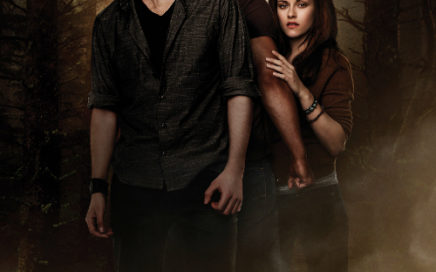
new-moon-posterWell, the first show is at Midnight here in L.A. I imagine it’s opening around the country at midnight as well. That would mean that, for anyone on east coast time, it will likely open just as I’m finishing this post. Twilight has become a phenomenon.  My daughter is on “Team Jacob”—the werewolf.

No we’re not going to the opening tonight, but she did insist I drive by the theater to see her comrades camped outside. They’ve been there all day (some probably all night). They must be the first in the seats to see it. She wanted to be with them—wearing her New Moon shirt, gushing over a guy who, only a few years ago, she didn’t even notice when he was in movies. Amazing to watch as new stars are born.

I want to write something that big so bad. I want to have teens and their parents and grown people who should know better camped outside the theater talking about which is their favorite character. As one now successful actor I interviewed in What I Wish I Knew Before I Moved to Hollywood said, “I remember, years ago, I was in Gelson’s Market with only a couple bucks in my pocket when in walked this big movie star. I said to myself, ‘That’ll be me one day.’”
There’s something much deeper about this movie phenomenon we are experiencing.  Stephanie Meyer took the traditional characters of vampires and werewolves and turned them into the Capulets and the Montagues. She then took a pale, blood-sucking, night crawling, serial killer and turned him into a diamond-skinned, superhero with a powerful love Jones for the only girl in high school whose mind he can’t read.

High school? What’s Count Dracula doing in high school? Seriously, this guy is a couple hundred years old. So what if he’s young looking? What kind of perv is that? I mean, when I was 17 I thought I was too mature to date 16 year-olds. This is a guy whose obviously never heard the words to Steely Dan’s Hey Nineteen—“We got nothing in common. No we can’t talk at all.” And that guy was only 15 years older than the young girl he was considering.

But alas… love.

But since when do werewolves actually turn into giant Wolfwolves?  What is this? Do silver bullets even work anymore? Vampires have superhero powers? They can come out in the sun? They don’t drink human blood? They don’t turn into creepy bats? They can’t be killed with crosses, holy water and garlic? They don’t have fangs? What the hell? Are they trying to put Blade out of business?

I think I understand why my daughter is on Team Jacob. I think Jacob represents, for girls, the best of both worlds. On one hand, you’ve got this cute boyfriend with a great body that everyone thinks is hot. On the other, you’ve got this big shaggy dog to protect you. Girls and their fantasies.

The point of this blog is for writers and film makers. The Twilight Saga represents the best of all worlds for the Hollywood movie machine and at the same time manages to be fresh, new and young.  Vampires are among the most produced characters in Hollywood. From the dawn of moving pictures, vampires have creeped across the walls of theaters. From Nosferatu to Dracula to Blade, the basic makeup and character of vampires has remained unchanged.

What Meyer’s did so brilliantly—and if she is to be believed from her interview on Oprah, so accidentally and luckily—is figure out how to combine genres in a commercially viable way. Romance/Horror/Fantasy/Adventure.

BUT…  Good thing she wrote it as a book. If she’d pitched it as a movie or screenplay before it was a successful book, no one in Hollywood would have touched it. How do I know? Because Nosferatu came out in 1921 and no one touched it since—not successfully anyway. I should say not seriously. There may have been comedic takes on vampires or werewolves that did pretty good, but they didn’t change the nature of those archetypes.  This is a prime example of a movie that only got made because of the book.

Hollywood will happily film a successful book, video game, TV show, stage play, fairy tale or an endless number of sequels, prequels and remakes; but when it comes to putting millions of dollars into original stories movie studios, more often than not, pass.

What’s that say to you about your new, original story that no one’s ever seen before? If no one’s ever seen it before, don’t expect Hollywood to make it.

But sell it as a book first or turn it into a successful stage play, and if you’re sales figures back it up, Hollywood will come to you.

Please tell me what you think. Do you agree? Disagree? Did I miss something? I’d love to hear from you in the comments below. Thanks for reading.

Good Luck,

T.R. Locke

Comments (10)

Tags: , , , , , , , , , , ,

What to Expect at Film Festivals

Posted on 11 November 2009 by T. R. Locke

Sundance Film FestivalA short time ago, the following message was sent to me via Twitter:

“@TRLocke– Morning! I need your feedback. What are your expectations and/or objectives when attending a film festival?”

With one of the world’s top four film festival, Sundance, right around the corner (January 21-31st), I thought the answer to that question would be helpful to the readers of this blog as well.

I have to admit that my initial answer to this question was less than favorable. I’ve attended about 20 film festivals in my life—only four of them intentionally.
The first film festival I attended was as a student reporter for my high school newspaper. It was a foreign film festival in Cleveland Heights at the Cedar-Lee Arts Theater. There I saw an amazing film shot in Port-Au-Prince Haiti with English subtitles. My memory of it tells me it was similar to a French version of Slumdog Millionaire without the game show device. Despite my flattering review, I doubt seriously anyone from my high school went to see it.

The other three film festivals I attended because I had a screenplay in contention (Chicago) or because a friend had a film in contention (Hollywood), or because I’d scored free tickets to the L.A. premier of an a movie that won the prize at another bigger film festival (Los Angeles—to see Hustle and Flow with Craig Brewer, John Singleton and Stephanie Allain ).

The rest were by happenstance–usually simply the result of living or working in some artsy district like River North and Wicker Park in Chicago or The Heights in Cleveland, or Burbank (and nearby NoHo—North Hollywood) now. The scenario often plays out like this—I’m walking down the street with family or friends, only vaguely aware a film festival is running, when some young filmmaker pops out of a near-empty theater and desperately begs us to come in and watch his movie for free. We look at each other, check our watches, ask what the film’s about and how long it is and then… sometimes we go. Sometimes we don’t. Suffice it to say, not all film festivals are created equal.

Although film festivals are primarily the domain of directors and producers, there are a few objectives that can be gained by anyone looking to attend. What you can gain is related to whether you’re a film director, producer, writer or actor, etc. Either way, having a plan and reasonable expectations definitely helps.

What follows is a list of what you can expect. The information is gleaned from my own experience as well as a number of other artists and books I’ve read over the years. I’m presenting this information in no particular order.

Contacts.  Regardless of what role you play in the movie business, film festivals are a place to meet people who share your interests and professional goals. These people often show up later at different places along your career path. Networking and meeting different people may help down the line. There’s no real guarantee it will help, but I’ve never seen it hurt.  You may have the opportunity to meet and befriend someone just before their film or yours blows up. Such a person could prove invaluable to helping you in your career. It would be rare—namely because people blowing up as the result of film festivals is rare, but it could happen. Actors and writers particularly stand to gain by meeting directors and producers who may be looking to hire you. The same can be said of cameramen, cinematographers, make-up artists, etc..

Parties. If you’ve been cooped up in an editing room cutting your film for the last six months, a party could do you a lot of good. When liquor’s involved anything can happen.

Education.  There are usually a lot of great panel discussions during film festivals. You can learn new ways to finance your film, new routes to submitting your screenplays to production companies, new ways filmmakers are making money through distributing their films in various markets around the world, cheaper methods of production, new insights into the latest technologies, how the business is changing, or you may even find me there talking about some topic from my book like what to expect in trying to get your film into Hollywood, etc.. Writers can learn about trends affecting the types of screenplays that are being purchased and new avenues for writing in emerging media.  According to a friend on Facebook, Nickelodeon and other studios often present discussion panels at film festivals in hopes of finding new talent for their writing programs or even to staff their shows.

See a Few Good Movies. Though you will likely see some films that make you wonder how in the world someone would put their time and energy into making it, you will probably see a few good films as well. If you’re really lucky, you might get to see the premier of a breakout film and maybe even meet the creators before they become famous and you have to go through their assistants.

Meet an Occasional Celebrity.  Most likely the ones you may meet would be of the B, C, and D-List variety. You likely don’t know their names, but you recognize them, right?  A-Listers are usually kept in a separate room/section/party—popping out to promote their pet pro-bono project (the film that will likely go on to win the top festival award) just before it premiers. But here’s a good chance to get some pics and impress some friends back home.

For those who actually get accepted into a film festival, here are some additional ways you can benefit:

Distribution. This is the grand prize of any filmmaker attending a film festival. “The winner gets a distribution deal.” That’s why most filmmakers enter. But because it’s only a prize for the winners, it’s not really something most should necessarily expect. In fact, even winners are finding the distribution channels for independent films are bottlenecking, according to the festival director at Sundance.

Get Your Movie Seen. Exhibition is another major goal for those entering film festivals. If your film is selected to be shown at a festival, you have the opportunity to be seen by industry professionals and audiences, which could end up opening doors for you. The key here, though, is that you must know that the festival itself is not going to hype and promote your movie for you. Just because your movie is showing in a festival does not mean people will see it. You have to promote it like mad. You went through all the work to make a movie and get it accepted to a festival. Don’t drop the ball now. Finish the work of packing out the house.

Prizes. You may not win the distribution deal, but if you get any kind of recognition to your film, you could use that recognition to help drive promotion later. Any type of prize at any festival looks good on the one-sheet—even if your prize was nothing more than a new Blue-Ray player.

Publicity. Local news media is sure to cover most film festivals in some form or fashion. If your film was selected for a film fest, use that opportunity to score an interview in local press or TV that might help lead to more exposure for yourself or you film.

These are all fairly reasonable goals you can have when attending or having your film in a festival. On top of these direct benefits, sometimes being in an atmosphere with other creative people can really get your juices flowing. Maybe you’ll meet someone who will become your producing or writing partner on your next film. Or maybe you’ll make a connection with someone who has equipment or an editing suite you can use on the cheap. If nothing else, perhaps you’ll meet someone who’s going through the same struggles as you and you’ll realize you’re not as alone as you may have thought.

Most importantly though, look not only for the benefit others can be to you, look for the benefit you can be to others.

Good Luck,

T. R. Locke

Comments (15)

Tags: , , , , , ,

Q&A: “Will Hollywood Reject Me for my Political Views?”

Posted on 04 November 2009 by T. R. Locke

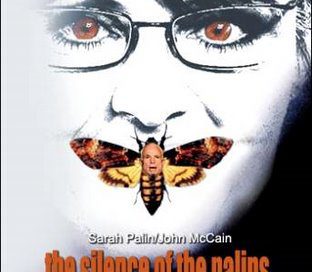
palin-silenceI received a question on my blog from a filmmaker and reader of my book. I’d like to answer his question in this post. For those who don’t know, in my book, I refer to the things I Wish I Knew before I moved to Hollywood as “WIKs”. The question is as follows:

Mr. Locke,

I just had a quick WIK question and I would be grateful if you could take a sec to answer it.  The political climate of Hollywood is far-left to left.  When I move there, will I be blacklisted or in any way discriminated against if I have a believe [sic] in or espouse in a different political ideology than from what currently dominates?

Thanks,
Charles

Excellent question, Charles. My answer is no. Here’s my thinking and belief. This business is really all about the dollars. If your idea has an audience and can make money, it really doesn’t matter what you believe.

Consider this for a minute: Hollywood can be understood to be anything that concerns the media. When you talk about celebrities of any ilk, they are represented by agents here in Hollywood. That means Glen Beck, Rush Limbaugh, Bill Oreilly–they all have Hollywood agents. They are all TV/Radio celebrities and you can’t get much more right wing than they. But not just them, nearly everyone you see anywhere representing any view (including many politicians) have agents in Hollywood. It’s how they get their shows negotiated and their book deals, etc. If money is coming, Hollywood doesn’t care what side of the fence it comes from.

Second, consider this: Hollywood tends to make far more conservative movies than liberal ones. That might sound a bit crazy to you, but think about it. Do you see more movies about war, fighting, and getting rich or about saving the forest, everyone getting along and sharing? Liberal stuff is simply not as dramatic. That’s just a fact. Far more movies are about national pride and willingness to die or kill for country, family, or honor. You could probably pitch an idea called, “Sarah Palin Saves the World” where you have the former Alaska governor flying around in a Huey sniping terrorist and clubbing baby seals. If you can show there’s a big enough audience to make a profit doing so, someone in Hollywood would be willing to make it. Okay, maybe not with clubbing baby seals, but clubbing terrorist, sure–especially if the female lead shows a little skin. For the right price you might even get the genuine article herself—check with her agent.  Remember Hollywood was torturing terror suspects long before Gitmo.

I just saw a report on TV that talked about how militarism is still so much alive in Hollywood. It’s very true. Militarism sells tickets.

Finally, I don’t think Hollywood is really, down inside, as liberal as it’s made out to be. As I said, it’s all about the dollars. Hollywood is notorious for typecasting, stereotyping and pigeonholing anything they can’t immediately see a big market for. They make vampire and sex films, not because they believe in vampires and sex, but because there’s a huge market for it right now. If the market disappears, Hollywood will dump vampire production faster than you can vote down universal healthcare.  Tyler Perry has proven there is a market for African-American films, but judging from production, Hollywood still seems to be hesitant to trust anyone to make one except him.

So to answer your question, no I don’t think you’ll be discriminated against for espousing a different political view—namely because I’m not sure your view is different.  Remember the current governor of California is an actor—and a republican (Schwarzenegger). So was Regan before him.

I will say this though; you will have trouble getting any actual political movie made. Political movies don’t do well in general unless they are a few generations removed. But Hollywood might be happy to put your ideas on radio, TV and books, because in those media, politics sell like hotcakes.

Hope that helps.

TRL

Comments (8)

Craig Review
Proctor Review
Script Coverage
Buy At Barnes and Nobel
YourGhostwriterOnline.com
Twitter
Buy at a Bookstore Near You
Trujillo Review
Book Critique 1
Buy My Book at Amazon
Herman Review

Twitter followers

Twitter followers

Follow T. R. on Twitter:

Follow @TRLocke on twitter.