Tag Archive | "Directing"

Tags: , , , , , , , , ,

New E-Book Releases–Goodreads Giveaway for Paperback Launches

Posted on 14 March 2013 by T.R. Locke

Kindle Book ImageEvery year 111,000 people move to L. A.–many of them looking for success in the entertainment industry. Tens of thousands audition for American Idol, America’s Got Talent, X-Factor and other talent shows hoping to break into an industry most only think they know. My goal is to help them know it better so that they have a better shot at their dreams.

On March 7th, I released the 2nd edition of What I Wish I Knew Before I Moved to Hollywood exclusively on Kindle. The new edition contains new interviews with an Emmy-winning producer and Film-festival winning screenwriter/director along with the interviews with Grammy-nominated singers, platinum-selling producers and award-winning movie and TV stars. The new edition is available for only $4.99, which is about a 1/3 the paperback price.

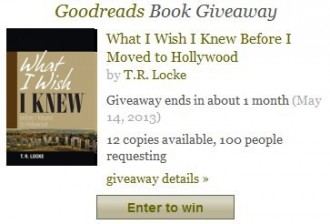
To help spur interest in the new edition’s release, I’m giving away 12 autographed copies of the 1st edition paperback in a contest on Goodreads (Click here to enter).  The contest runs through May.

If you know or care about anyone even thinking about a career in the entertainment business, no matter where they are in the process, get them this book. The title is What I Wish I Knew BEFORE I Moved to Hollywood, but the information is good for people already in Hollywood, too. What does it take to keep going?  How do you get seen? How do you get booked? How do you stand out?  What is your voice? Your niche? Your type?  And how do you stay encouraged in the hard times? Every year 111,000 move to L. A.  But every year 100,000 move away–many dejected, frustrated and sad. Those are the ones who didn’t read this book.

What’s it take to make it as a singer in Hollywood–read what Chante Moore had to say about it in my book. Trying to be comedian? Read what a standup comedian and writer for Steve Harvey, D.L. Hughley and Bernie Mac says. Want to be a producer? See what the Emmy-winning producer has to say. Want a directing/screenwriting/development deal at HBO? My interviewee had one.  Want to be an actor? Find out what a star who makes $250,000 a week says about how to become one. Want to do make-up? Find out what the head make-up artist for one of Fox’s hit dramas says you should do. Want to rap or make beats? Find out what Dr. Dre and Ice Cube’s go to guy says.


Artists love to act like they have it all together–keep a smile, be positive, stay away from negative energy. That’s all great. But are you getting where you want to go? If not, it smart to get help when you need it. It’s one thing to make others think you have it all together; it’s quite another to fool yourself.

Comments (1)

Tags: , , , , ,

Why Red Tails is NOT a Black Movie

Posted on 21 January 2012 by T.R. Locke

George Lucas's Red Tails

There’s been a lot of reporting lately about the importance of George Lucas’s new movie Red Tails for the Black community. The argument goes like this: If people don’t go see Red Tails, Hollywood will never fund higher budget black movies again.  Although the basic altruism of White people might be moved by this argument, it is primarily an argument to the Black community to get behind this movie. But it is the wrong argument and not the thing Hollywood is looking for. For a movie of this budget to succeed, this movie must draw Blacks AND Whites… Latinos, Asians and every other race, too. So how does this argument work for them? It doesn’t. All people care about is whether a movie is good—does it move us, does it entertain…is it worth the price of admission? The right argument for why people should see Red Tails is because it’s a great movie that talks about an important part of American History that has been hidden from them for some reason. Why did they hide this? What happened?

Think about it this way: People went to see National Treasure and DaVinci Code because they were stories that argued that there COULD be some hidden history that was kept hidden by a secret cabal. Here is a film about something that actually IS hidden history—that actually has been KEPT HIDDEN from American citizens for some reason. The things that happened in this film are real–the real story of  real people. This isn’t some novelist’s speculating. It is reality.

Seeing as I’ve just returned from viewing the movie last night, I want to make a second argument that I think works for everyone. Red Tails is not a black movie. Red Tails is an action film by George Lucas—the best and most successful action movie producer in the history of the planet earth according to Star Wars and Indiana Jones.

And here’s a third great reason that was suggested to me by my daughter: This movie is about real heroes. It doesn’t glamorize or sugarcoat war and it doesn’t show superhumans fighting alien machines. It is real people fighting a real war—real human heroes fighting against very strong odds, with consequences dire for our real world.

Think about this: Every movie hitting the theaters today seems to paint heroes as supernaturally gifted—from vampires, wizards, witches, warlocks and werewolves worshipped by our kids to mutants and dozens of other miraculous flying, radiating, flaming, costumed millionaires. There aren’t very many films showing real young men struggling to be courageous. There aren’t many films that tell your child—be he or she black, white, yellow or brown that heroism is within them.  There are a lot of fantasy films that tell your child that there are magical people in the world who can solve all the world’s problems. But there aren’t many that tell them they have all they need inside of themselves and that courage, loyalty, tenacity, and faith are qualities God instilled in all men.  Red Tails does this.  Do you want your child believing they have to be magically bitten by radioactive bugs, exposed to chemicals, born the magical wizard, or strangely mutated to be heroic—to be the hero in their own lives or in the world?

Red Tails is a film about everyday underdogs overcoming internal, external and societal obstacles to become heroes. And that’s why everyone should see this film.

Update 3/7/2013: (The 2nd edition of  What I Wish I Knew Before I Moved to Hollywood available now exclusively on Kindle for only $4.99. Get yours now. Click here. Kindle e-books can be read on I-phone, I-pod, I-pad, Android, Mac and PC with the free Kindle App.)

Comments (8)

Tags: , , , , , , , , , , ,

American Idol—Hollywood in Microcosm

Posted on 30 March 2010 by T.R. Locke

Andrew Garcia on American Idol
While I was watching American Idol last week, it suddenly hit me—so much of what we see happening on that show serves as a perfect metaphor for Hollywood. I watched as contestant after contestant took their place before the microphone and presented their gift to the world. Then watched again as the judges gave their opinions. Each contestant listened (or not) and then moved on so the next could have their turn.

Early in the show this season, one young man, Andrew Garcia, performed a slow guitar rendition of Paula Abdul’s “Straight Up” that blew my mind, the judges’ minds and the rest of America’s minds.[HD] Andrew Garcia – Straight Up Acoustic Version American Idol Hollywood Round2 It was clear he was in a class all by himself. His performance was far beyond anything anyone sang to that point (and many believe since). It did not appear that any of the other contestants had even a glimmer of a hope of winning the contest. Other performers sang decent enough, but nothing of that caliber.

Then something happened… The next performance. Andrew did his style—the style everyone loved—but he did it with a more obscure and modern song that not everyone knew, Fall Out Boy’s “Sugar We’re Going Down.” Here’s the vid: Andrew Garcia Performance Sugar, We’re Going Down Fall Out Boy @ American Idol S09E142. There was absolutely nothing wrong with the performance itself. It was excellent. The audience loved it. The only problem was that Simon didn’t realize that Andrew did an original performance of the song (Here’s the original song video. So Simon, who commented first, canned it. He compared it to Straight Up and said this performance was so inferior. Kara realized it was an original arrangement, and gave Andrew credit for the risk, but she also agreed with Simon about wanting Andrew to do more songs like Straight Up. The rest of the judges followed suite.

What the judges all meant was that they wanted songs that were very popular, which would be understood by everyone to be rearranged and done in Andrew’s style. But Andrew didn’t get that. What he got was… confused.

The next week Andrew completely changed his style Where he had demonstrated so clearly that he knew exactly who he was as an artist in his previous performances he now seemed lost and confused about not only what to sing, but how. Gone was his guitar. Gone was his style. Gone was his melodic and powerful riffs. There he was singing Marvin Gaye’s “Heard It Through the Grapevine” and looking nothing like the powerhouse he was at the beginning. Check it out here. In fact, he looked like he had no idea what he was doing. How did he go from sure winner in to just another contestant?

How is an artist’s journey on American Idol a microcosm of life in Hollywood? First off, as I mentioned in my book, What I Wish I Knew Before I Moved to Hollywood, no one comes to Hollywood unless someone told them they had talent. Unless the contestant is just looking to be a clown on national television, he sincerely believes he has talent. One thing most contestants have in common is that someone somewhere encouraged them to pursue their gifts. It’s apparent in the early season try out shows that not everyone tells their friends the truth, but most of the singers who try out do have talent. So it is with any person who comes to Hollywood looking for a career in the entertainment industry. It is a rarity for someone to come here without a number of assurances that they have a special talent that should be in movies, or on records or that could make them rich.

In Andrew’s case, he had been singing and performing with friends, posting videos on You Tube and doing original arrangements and covers of popular songs for years. Check out some of his videos:
Sunday Morning beatbox cover (I’d like to see him and this girl do this exact version on the show.)
Michael Jackson Medley
Replay Cover.

During that time, he developed his style and he got used to performing. So when Andrew came to Hollywood, he had a sense of who he was. One of things that’s important for any artist looking for success here is that they have a real sense of who they are as an artist. As I’ve mentioned in previous blogs and articles, such as “How to Get An Agent,”  Hollywood is a marketing machine above all else. Hollywood markets human talent packaged in movies, music, television, books, and art.

The more clearly you know who you are, what your market is, and where you fit in, the more likely your chances of finding your place and finding representation (agent, producer, contract, label, manager) to help sell your talent.

Most of the comments contestants hear from the judges have to do with whether or not the judge “gets it” or knows how to market the artist. The artist who clearly performs a certain style with consistency is the artist that will most likely walk away with an album deal whether or not they win the contest. In fact, the highest compliment a judge can pay a singer on the show is to say, “I can see your album already.” That means they know which radio stations will play it. They know which producers to bring in to work with the singer. They have an idea of which established stars might want the singer on tour with them. They may even know how many records they can sell to the audience. Such an artist will also have a larger fan base as well because fans of a particular style will gravitate towards an artist that shows he belongs in that style.

But the artist who is inconsistent or lacking a unique style, or has a variety of styles will be viewed as “not ready,” “unprofessional,” “confusing,” “all over the place.” Even if a song is well sung, if their style is inconsistent, the judges will often complain of “not knowing what to do” with that singer.

Hollywood draws marketing lines very clearly. If you are a comedy writer, you must write comedy after comedy—not thrillers, comedies, actions, and dramas, which only confuses agents, producers, and show runners. As well, the stories you write must fit the genre and must have some uniqueness that is your signature as a writer. If you are an actor, you must know what type you fit and how people see you. You must present a consistent image to Hollywood in order for you to stay on the radar of casting agents. Your image must both fit in the genre you wish to work as well as be unique to yourself. The same holds true of directors—you must know which genre you do best and you must have a certain style that adds something to that genre.

Finally, Andrew discovered three truths that, despite his obvious and amazing talent, also affect nearly every artist in Hollywood: 1. Trying to please people can and will wreck your art. 2. What you have done in the past will not carry you forever in the future. 3. You will face rejection and criticism.

If Andrew is able to get back to his original style, he will have a chance at winning this season (update–he didn’t). But what has happened to Andrew is simple—he lost sight of his own unique style because he was trying to fit in with what he thought the judges wanted. If an artist does not yet have a style, it might work to push one on him (or actually—help him find a style that suites him), but generally an artist attempting to conform to anyone’s ideal beside his own usually kills his art. A person’s art is a psychological part of their being—much like their personality. Altering one’s artistic style generally kills creativity. In the end, the artist won’t be happy and neither will the producers or executives. Each time Andrew performed a slightly different style than his own, he felt uncomfortable, the audience felt uncomfortable and the judges criticized him harshly.

It is a fact that people in Hollywood, in attempt to figure out how to market you, may try to change you—be it an agent, producer, casting director or executive. Often an artist has a portion of something Hollywood wants to market—such as a look or idea, but the artist doesn’t have the full package. Hollywood wants to make money, so forcing you into a niche that may have a pool of customers hungry for product isn’t outside their purview. But generally, even if you succeed at faking it, your audience will sense you are disingenuous and you won’t last. But usually, it simply fails out the gate. When it fails, you fail, but Hollywood just moves on to the next artist. Much like American Idol, even though they told you it would work, when you fail, it’s not their fault—it’s yours.

Initial success in Hollywood can be both a blessing and curse—just ask Macaulay Culkin . If studios have made a lot of money from your talent in the past, they will want you to continue to provide that talent. Generally it does mean stereotyping or limiting an artist’s output. But it can also make you a victim of trends. If you “go out of style” your career will be dead for a generation—until your style returns. Jason Bateman, M.C. Hammer, and Neil Patrick Harris all caught the second wave of their careers.

Lastly, what’s most unfair about rejection and criticism in Hollywood is just how vague or opaque it can be. In Andrew’s case, the judges weren’t really clear about the problem in his performance. All they really meant to say was that they wanted him redoing more successful hits. “Straight Up” was a number one hit for Abdul, known by nearly everyone—and it was old. Andrew made it modern and cool and did what Hip Hop artist have done for years—repackaged already popular songs into something new. “Sugar We’re Going Down” was not a huge hit. No one could tell what Andrew was doing with the song because it wasn’t popular enough. And, because it is a current radio song, it isn’t ripe for remaking anyway. A simple comment to Andrew to “Stick with remaking older hits into modern songs,” would have given him all he needed, but that might have also shown Simon’s hand a little too much.

Hollywood doesn’t like to admit how much they’d rather repackage something than create something completely new. But marketing dictates that old brands with loyal customers sell easier (and cheaper) than new ones.

Andrew did, however, get advice that was fairly close to the target. Usually advice from Hollywood is much more cryptic if it exists at all. Rejections are rarely followed by explanations. You may well have been a contender for the role up to the last minute, but you won’t always know it. Or you may have been very close to representation or a greenlight but the fax machine broke or a new President of Production was hired. The point is that you must understand rejection is part of the game and that it will come. The next company you submit to may love you. So keep submitting.

As you watch American Idol, notice how one week the judges are in love with a contestant and the next week they may well turn their noses. Stick around because who knows what will happen the week after that—in that show or in your career.

Update 3/7/2013: (The 2nd edition of  What I Wish I Knew Before I Moved to Hollywood available now exclusively on Kindle for only $4.99. Get yours now. Click here. Kindle e-books can be read on I-phone, I-pod, I-pad, Android, Mac and PC with the free Kindle App.)

Comments (10)

Tags: , , , , , , ,

New Free Movie Making Animation Software–Interesting

Posted on 16 February 2010 by T.R. Locke

Sarah Palin is a lightning rod of media attention. Her endurance in mass media has been amazing. When I came across this cool  new movie making animation software program by Xtranormal called Text to Movie and her pre-animated avatar, I couldn’t resist using her image to help push my book on Larry King.

Although this program is limited a bit by its computerized voice and actions, the possibilities of what can be done with it, even in its current state, are compelling.

I wrote this script, directed it and uploaded it in a matter of minutes. Getting the timing as right as possible and getting the voices to say what I wanted, took a couple hours, but viola. Moments after posting, it had garnered over a hundred views and hopefully will keep spreading.

This technology holds huge promise for writers and directors:  sharing story ideas, jokes, writing short scenes and even creating an entire web series. As the technology and text to speech capacity improves, I can imagine a lot from this program. Tell me what you think.

TRL

Comments (5)

Tags: , , , , , , , , , , ,

What to Expect at Film Festivals

Posted on 11 November 2009 by T.R. Locke

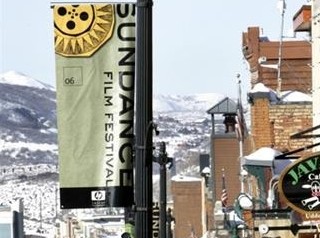
Sundance Film FestivalA short time ago, the following message was sent to me via Twitter:

“@TRLocke– Morning! I need your feedback. What are your expectations and/or objectives when attending a film festival?”

With one of the world’s top four film festival, Sundance, right around the corner (January 21-31st), I thought the answer to that question would be helpful to the readers of this blog as well.

I have to admit that my initial answer to this question was less than favorable. I’ve attended about 20 film festivals in my life—only four of them intentionally.

The first film festival I attended was as a student reporter for my high school newspaper. It was a foreign film festival in Cleveland Heights at the Cedar-Lee Arts Theater. There I saw an amazing film shot in Port-Au-Prince Haiti with English subtitles. My memory of it tells me it was similar to a French version of Slumdog Millionaire without the game show device. Despite my flattering review, I doubt seriously anyone from my high school went to see it.

The other three film festivals I attended because I had a screenplay in contention (Chicago) or because a friend had a film in contention (Hollywood), or because I’d scored free tickets to the L.A. premier of an a movie that won the prize at another bigger film festival (Los Angeles—to see Hustle and Flow with Craig Brewer, John Singleton and Stephanie Allain ).

The rest were by happenstance–usually simply the result of living or working in some artsy district like River North and Wicker Park in Chicago or The Heights in Cleveland, or Burbank (and nearby NoHo—North Hollywood) now. The scenario often plays out like this—I’m walking down the street with family or friends, only vaguely aware a film festival is running, when some young filmmaker pops out of a near-empty theater and desperately begs us to come in and watch his movie for free. We look at each other, check our watches, ask what the film’s about and how long it is and then… sometimes we go. Sometimes we don’t. Suffice it to say, not all film festivals are created equal.

Although film festivals are primarily the domain of directors and producers, there are a few objectives that can be gained by anyone looking to attend. What you can gain is related to whether you’re a film director, producer, writer or actor, etc. Either way, having a plan and reasonable expectations definitely helps.

What follows is a list of what you can expect. The information is gleaned from my own experience as well as a number of other artists and books I’ve read over the years. I’m presenting this information in no particular order.

Contacts.  Regardless of what role you play in the movie business, film festivals are a place to meet people who share your interests and professional goals. These people often show up later at different places along your career path. Networking and meeting different people may help down the line. There’s no real guarantee it will help, but I’ve never seen it hurt.  You may have the opportunity to meet and befriend someone just before their film or yours blows up. Such a person could prove invaluable to helping you in your career. It would be rare—namely because people blowing up as the result of film festivals is rare, but it could happen. Actors and writers particularly stand to gain by meeting directors and producers who may be looking to hire you. The same can be said of cameramen, cinematographers, make-up artists, etc..

Parties. If you’ve been cooped up in an editing room cutting your film for the last six months, a party could do you a lot of good. When liquor’s involved anything can happen.

Education.  There are usually a lot of great panel discussions during film festivals. You can learn new ways to finance your film, new routes to submitting your screenplays to production companies, new ways filmmakers are making money through distributing their films in various markets around the world, cheaper methods of production, new insights into the latest technologies, how the business is changing, or you may even find me there talking about some topic from my book like what to expect in trying to get your film into Hollywood, etc.. Writers can learn about trends affecting the types of screenplays that are being purchased and new avenues for writing in emerging media.  According to a friend on Facebook, Nickelodeon and other studios often present discussion panels at film festivals in hopes of finding new talent for their writing programs or even to staff their shows.

See a Few Good Movies. Though you will likely see some films that make you wonder how in the world someone would put their time and energy into making it, you will probably see a few good films as well. If you’re really lucky, you might get to see the premier of a breakout film and maybe even meet the creators before they become famous and you have to go through their assistants.

Meet an Occasional Celebrity.  Most likely the ones you may meet would be of the B, C, and D-List variety. You likely don’t know their names, but you recognize them, right?  A-Listers are usually kept in a separate room/section/party—popping out to promote their pet pro-bono project (the film that will likely go on to win the top festival award) just before it premiers. But here’s a good chance to get some pics and impress some friends back home.

For those who actually get accepted into a film festival, here are some additional ways you can benefit:

Distribution. This is the grand prize of any filmmaker attending a film festival. “The winner gets a distribution deal.” That’s why most filmmakers enter. But because it’s only a prize for the winners, it’s not really something most should necessarily expect. In fact, even winners are finding the distribution channels for independent films are bottlenecking, according to the festival director at Sundance.

Get Your Movie Seen. Exhibition is another major goal for those entering film festivals. If your film is selected to be shown at a festival, you have the opportunity to be seen by industry professionals and audiences, which could end up opening doors for you. The key here, though, is that you must know that the festival itself is not going to hype and promote your movie for you. Just because your movie is showing in a festival does not mean people will see it. You have to promote it like mad. You went through all the work to make a movie and get it accepted to a festival. Don’t drop the ball now. Finish the work of packing out the house.

Prizes. You may not win the distribution deal, but if you get any kind of recognition to your film, you could use that recognition to help drive promotion later. Any type of prize at any festival looks good on the one-sheet—even if your prize was nothing more than a new Blue-Ray player.

Publicity. Local news media is sure to cover most film festivals in some form or fashion. If your film was selected for a film fest, use that opportunity to score an interview in local press or TV that might help lead to more exposure for yourself or you film.

These are all fairly reasonable goals you can have when attending or having your film in a festival. On top of these direct benefits, sometimes being in an atmosphere with other creative people can really get your juices flowing. Maybe you’ll meet someone who will become your producing or writing partner on your next film. Or maybe you’ll make a connection with someone who has equipment or an editing suite you can use on the cheap. If nothing else, perhaps you’ll meet someone who’s going through the same struggles as you and you’ll realize you’re not as alone as you may have thought.

Most importantly though, look not only for the benefit others can be to you, look for the benefit you can be to others.

Good Luck,

T. R. Locke

Comments (15)

Tags: , , , , , ,

Directors and Film Producers–Moving to Hollywood Special Vlog

Posted on 29 October 2009 by T.R. Locke

This is the fifth and last of a series of articles about relocating to Hollywood or New York to follow dreams in the entertainment industry.

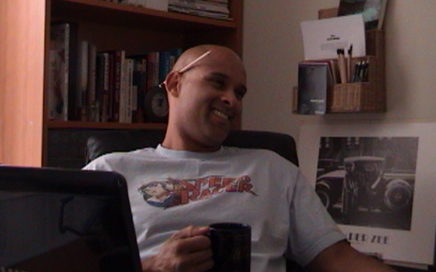
Here’s my first (and perhaps only) Vlog. Please leave a comment to let me know what you think and please check out the other blogs on this site. Can you tell I’m nervous? I don’t know how many takes it took, but as you can tell by the annotations I included, I still missed stuff.

Additional thoughts are that a bunch of new Online Film Festivals for directors and producers to get their films into. If you haven’t taken advantage of these, you should consider it.

For years, directors and film producers made their films independently then sent them to festivals across the country hoping to get accepted. If they got accepted, they might get viewed by a couple hundred people at the fest–unless it was a real hit. Today, you can get a couple hundred people to view your movie online without even trying.  With cheaper bandwidth has come better video sites and more people are beginning to view movies on their computers–even Netflix offers movies via download.

There is a foreseeable future, and may already be here,  where independent film makers will be able to enjoy a decent living from their films without ever having to come to Hollywood at all. Imagine digitally uploading your film directly to theaters.

In the meantime, check out what I learned in interviews for my book with directors and producers here in Hollywood is the best way for young filmmakers to break into the business now.

Thanks for stopping by. Please leave your comments and/or questions. And don’t forget to let me know what you think about the video.

Good Luck,

TRL

Comments (11)

Tags: , , , , , , , , , , ,

Comments, Questions and Answers

Posted on 29 May 2009 by T.R. Locke

Cover

Hey!

Thanks for dropping by. Whether or not you’ve read my new book,  I Followed my Bliss to Bankruptcy–What I Wish I Knew Before I Moved to Hollywood, I invite you to make comments or ask questions about Hollywood or the book here.

Your questions aren’t limited to the book. If there’s anything you want to know about the business of Hollywood, I’ll do my best to answer it–and if I can’t, I’ll find an expert who can. I also hope to begin posting blogs, vlogs and interviews in the other section called, “Making it in Hollywood.” Check back often or even join, to get more information and advice from successful guest contributors.

Thanks,

T. R. Locke

Comments (3)

Tags: , , , , , , , , , , , ,

Tip #1 For Making it in Hollywood–Thick Skin

Posted on 28 May 2009 by T.R. Locke

Mmm. The first real tip. Let’s see. How’s this…?

Thick Skin

Develop a very thick skin.

I just happened to see the job listings from UTA (United Talent Agency). The job listings are supposed to be internal openings that agents and their assistants browse to learn what production companies, or their own clients, are looking for in terms of support staff. Most of the listings are for agent assistants, celebrity assistants, interns/trainees and other lower-level studio executives. They are the kind of jobs many people who come to Hollywood hope to land in order to get a foot in the door.

These lists get swiped and passed around through email. Join almost any creative support group and you’re likely to come across one or more from a major agency. They all have them. And some of the jobs pay decent wages, too. You can be a celebrity assistant for instance and earn “$48K/year–no benefits.” However the reply link was via a country music company, so it might not be enough money.

What traits do many of the jobs look for? Well, along with, “must be willing to work flexible hours and be utterly committed to the job,” one very telling request was as follows: “Must have thick skin.”

What makes someone put that in a job posting? Not sure, but I would guess they lost their prior assistant because they cussed them out one too many times.

Thick skin. It’s not only good for assistants working for agents and celebrities, but it’s a must for any creative person who puts their talent up for judgment.

In fact, thick skin might be too soft a term–try armor plating. “Must have armor plating.” Armor is better than skin for repelling the knives that often fly at you. “Must be bulletproof.”

Whatever dreams you might have in Hollywood, unless you’re extremely lucky, you’ll encounter lots of rejection before you find it.  Not letting that rejection penetrate,  not taking the harsh comments to heart–letting them bounce off your thick skin will definitely help you stay on track and give you a better shot at reaching your goals.

Keep at it,

T. R. Locke

Please share these tips with your friends by clicking the Share This button below to send a link by email or recommend this post on your favorite social site.

Comments (3)