Tag Archive | "Acting"

Tags: , , , , , , , , ,

New E-Book Releases–Goodreads Giveaway for Paperback Launches

Posted on 14 March 2013 by T. R. Locke

Kindle Book ImageEvery year 111,000 people move to L. A.–many of them looking for success in the entertainment industry. Tens of thousands audition for American Idol, America’s Got Talent, X-Factor and other talent shows hoping to break into an industry most only think they know. My goal is to help them know it better so that they have a better shot at their dreams.

On March 7th, I released the 2nd edition of What I Wish I Knew Before I Moved to Hollywood exclusively on Kindle. The new edition contains new interviews with an Emmy-winning producer and Film-festival winning screenwriter/director along with the interviews with Grammy-nominated singers, platinum-selling producers and award-winning movie and TV stars. The new edition is available for only $4.99, which is about a 1/3 the paperback price.

To help spur interest in the new edition’s release, I’m giving away 12 autographed copies of the 1st edition paperback in a contest on Goodreads (Click here to enter).  The contest runs through May.

If you know or care about anyone even thinking about a career in the entertainment business, no matter where they are in the process, get them this book. The title is What I Wish I Knew BEFORE I Moved to Hollywood, but the information is good for people already in Hollywood, too. What does it take to keep going?  How do you get seen? How do you get booked? How do you stand out?  What is your voice? Your niche? Your type?  And how do you stay encouraged in the hard times? Every year 111,000 move to L. A.  But every year 100,000 move away–many dejected, frustrated and sad. Those are the ones who didn’t read this book.

What’s it take to make it as a singer in Hollywood–read what Chante Moore had to say about it in my book. Trying to be comedian? Read what a standup comedian and writer for Steve Harvey, D.L. Hughley and Bernie Mac says. Want to be a producer? See what the Emmy-winning producer has to say. Want a directing/screenwriting/development deal at HBO? My interviewee had one.  Want to be an actor? Find out what a star who makes $250,000 a week says about how to become one. Want to do make-up? Find out what the head make-up artist for one of Fox’s hit dramas says you should do. Want to rap or make beats? Find out what Dr. Dre and Ice Cube’s go to guy says.
Artists love to act like they have it all together–keep a smile, be positive, stay away from negative energy. That’s all great. But are you getting where you want to go? If not, it smart to get help when you need it. It’s one thing to make others think you have it all together; it’s quite another to fool yourself.

Comments (1)

Tags: , , , , , , , , ,

Rihanna and Chris Brown to play Ike and Tina in New “What’s Love?”

Posted on 08 December 2010 by T. R. Locke

Was it just to hype their new film?

With their reappearance at the 2013 Grammys, some are seeing what I saw three years ago. Since this article explored this couple and Whitney Houston prior to her passing, I’ve decided to feature it again. Here it is if you missed it the first time:

Would you be surprised to see that headline? It seems lately that celebrities resort to the most ridiculous tactics to promote their new films and albums. With competition for news being what it is, the more sensational and outrageous a story hook, the more likely it will find its place on national news shows and in national magazines.

Whitney Houston goes on Oprah with an “exclusive interview” in which she talks about her drug addiction and leaving Bobby Brown. “Oh the horror of our marriage and what was going on behind the scenes,” she said crying, sobbing… “by the way, I have a new album born of my pain. May I sing you a few songs?” And to number one it goes. And since then? Gone—probably back to Bobby, and with her newly minted millions from her album sales… probably crack, too.

Phil Collins (talk about a blast from the past—has he even done anything since the Tarzan Soundtrack?) suddenly appears in Rolling Stone with a shotgun, pick axe, machete, hunting knife and various other antique farm implements laid out on the Persian rug beneath him, looking more like Courage the Cowardly Dog’s owner than a rock god.

From Rolling Stone

“I’ve had thoughts of su-su-suicide and I’m tired of all the people talking about me.” (What people? Didn’t Phil die years ago?) “By the way, I have a new album coming out. It may be my last. You never know. Better go get it.” Oh, that explains it.  Reminds me a lyric from Prince’s Pop Life:

What’s the matter with your life?
Is the poverty bringing you down?
Did the mailman jerk you around?
Did he put your million dollar check in someone else’s box? Tell me.

“No.  I just have an album to sell and talking about suicidal thoughts and paranormal activity seemed the most effective way to relate to this new generation.”

Tyler Perry was next. “I was abused, Oprah! Sexually so. When only a boy…” as the tears stream down his cheeks. “And that’s what gave me the sensitivity to do For Colored Girls… because…well, I was abused just like colored girls who considered suicide when the rainbow wasn’t enough.  I lived it myself. And, yes, it will be in theaters this week packed with all the emotion you see right here before you.”

Some have stories. Others truly live it out. Some seem such a mess that it’s hard to figure out how they even manage to complete any projects at all. I imagine that Lindsay Lohan’s next project is going to be huge.  Brittany Spears’ certainly was. It seemed she was such a wreck before her album came out—shaving her head allegedly over her breakup with Kevin Federline—in and out of various clinics. But that didn’t stop her from putting together one of the best albums of her life. It dropped and everything is great now. Wow. Grammy? VH1 Award? Sure. Thanks. I’m much better. See you next year.

What’s this tell you about Hollywood? Promotion is part of the game. Even Harrison Ford has to drag his dust-farting ass out to worship at the altar of Letterman, Leno, Stewart and Fallon. Harrison can’t even remember what film he was in or what it was about, but he’s there—looking like Han Solo’s grandpappy Dutch Blitz. “Hello everyone. Yes, I’m the guy who played that guy you liked in that movie 25-35 years ago. Hello! Please go see my next movie.” It’s all part of the sell.

Perhaps the one that actually made me laugh was Sting. I caught him on Jon Stewart looking rather annoyed at having to hustle his new CD on TV. But there he was. “I like doing new things,” he said. “I can’t stand playing the same songs year after year—I need to mix it up. That’s why I released this new album with the London Philharmonic Orchestra.”  (He even joked of it being reminiscent of the parody rock band movie This is Spinal Tap where one of the band members thinks his stuff is good enough to have the acoustic versions performed by the London Phil.) And what was the new thing he did with the Philharmonic that he wanted us to run out and buy? The Muzak version of “Every Little Thing She Does Is Magic” and every other song he did 30 years ago and has been doing “year after year” since. I could have sworn I heard that version in an elevator 25 years ago. Nonetheless, sell that “original” album Sting.

Remember it’s called Show “Business” and no matter how big a star you are, you can never stop being a hustler in Hollywood.

PS. Since this article, we mourned the loss of Whitney Houston who, sadly, apparently did return to drugs. What a tragedy that all the people around her could not, or did not,  help her.  And what a commentary on the industry.

Update 3/7/2013: (The 2nd edition of  What I Wish I Knew Before I Moved to Hollywood available now exclusively on Kindle for only $4.99. Get yours now. Click here. Kindle e-books can be read on I-phone, I-pod, I-pad, Android, Mac and PC with the free Kindle App.)

Comments (8)

Tags: , , , , , , , , , , ,

Lessons from DVD Extras–Getting Past the Cut

Posted on 14 May 2010 by T. R. Locke

One of the great places to learn lessons about Hollywood is the commentary section of DVDs.  It’s amazing the insights you can gain from filmmakers talking quite innocently about the process of getting the movie made. Sometimes the things they think they’re teaching you about the movie business aren’t what you walk away having learned. In fact, sometimes you can learn things they don’t really want you to know.

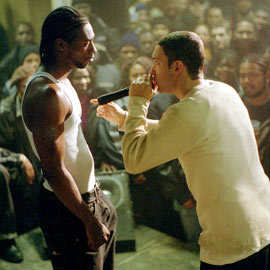
Just recently I watched 8 Mile—the Eminem bio film. The film is about rapper Eminem struggling to become a successful recording artist in Detroit by winning rap battles. It follows the exact same format that most “outsider young person struggles to find himself in a strange world” films (Step Up, Stomp the Yard, Drumline, Bring It) follow.

In the DVD extras, there is a section about filming the rap battles themselves.  Particularly, there is a story about how the film’s director and producers decided they wanted to have local rappers actually battle Eminem in order to get a more gritty realism.

The call goes out among the hundred or so extras who made up the crowd during the club and rap battle scenes. Three rappers, the ones who possessed the skills to top a real rap battle in the room, would then be put in the film as star actors featured battling Eminem. This was a chance of a lifetime for these actors who’d only been booked in very low paying extra jobs where their faces would likely never even be seen (see article on being an extra here). Here was a chance to be credited in a major motion picture, to have the camera right in your face and to be able to launch a career in acting.

Dozens of the extras tried out for the roles. Most were rejected out of hand, but quite a few showed promise. Eventually the contestants were whittled down and three lucky and talented ones were chosen. They were very talented too.

One by one, the rapper/actors/contest winners took their positions before Eminem to battle him. Although initially told to save his voice for the dialogue scenes and only to lip sync his comebacks against these rappers, Eminem couldn’t let the taunts in front of the packed room go unanswered. Impressively, true to his character in the film, he improvised clever responses to each rapper—clearly putting them in their place.

So what did we learn from this DVD extra? That Eminem is actually a very good rap battler? Yes. That’s what the film director wanted us to learn. But here’s what we learned that he didn’t want us to learn: After all of the contest—all of the hopes and dreams of each rapper in that room being placed before them—the promise of a starring role in a major motion picture. After winning the contest and being chosen as one of the three actors to battle the star; after filming the battle against Eminem and rejoicing, celebrating and telling all their friends and family about it; after the movie comes out six to nine months later, after all of the anticipation, after buying the popcorn and taking your seat in the theater….

Not a single one of those actors’ battles appeared in the film.  Every single one was cut. Every one. Those actors are not featured anywhere except in the DVD rap battle extras section. But at least they were featured there. Many actors find their roles, in fact, whole characters cut from movies. Where they expected a reel to show agents, managers, casting directors, or at least a credit for their resume, they may get nothing.

Some executive didn’t think the scene was necessary—one battle too many. Or it didn’t work—the lighting was bad, etc. For whatever reason, the film you starred in you no longer star in. The film goes on to be number one at the box-office—oh well, at least it got released. Hundreds of movies get filmed that never even get released.

Welcome to Hollywood. Such things happen here. They don’t always happen, but they do happen. The point is not to discourage you. The point is to make you aware so that, if it does happen, you don’t give up.

Good luck.

TRL

Update 3/7/2013: (The 2nd edition of  What I Wish I Knew Before I Moved to Hollywood available now exclusively on Kindle for only $4.99. Get yours now. Click here. Kindle e-books can be read on I-phone, I-pod, I-pad, Android, Mac and PC with the free Kindle App.)

Comments (8)

Tags: , , , , , , , , , , ,

American Idol—Hollywood in Microcosm

Posted on 30 March 2010 by T. R. Locke

Andrew Garcia on American Idol
While I was watching American Idol last week, it suddenly hit me—so much of what we see happening on that show serves as a perfect metaphor for Hollywood. I watched as contestant after contestant took their place before the microphone and presented their gift to the world. Then watched again as the judges gave their opinions. Each contestant listened (or not) and then moved on so the next could have their turn.

Early in the show this season, one young man, Andrew Garcia, performed a slow guitar rendition of Paula Abdul’s “Straight Up” that blew my mind, the judges’ minds and the rest of America’s minds.[HD] Andrew Garcia – Straight Up Acoustic Version American Idol Hollywood Round2 It was clear he was in a class all by himself. His performance was far beyond anything anyone sang to that point (and many believe since). It did not appear that any of the other contestants had even a glimmer of a hope of winning the contest. Other performers sang decent enough, but nothing of that caliber.

Then something happened… The next performance. Andrew did his style—the style everyone loved—but he did it with a more obscure and modern song that not everyone knew, Fall Out Boy’s “Sugar We’re Going Down.” Here’s the vid: Andrew Garcia Performance Sugar, We’re Going Down Fall Out Boy @ American Idol S09E142. There was absolutely nothing wrong with the performance itself. It was excellent. The audience loved it. The only problem was that Simon didn’t realize that Andrew did an original performance of the song (Here’s the original song video. So Simon, who commented first, canned it. He compared it to Straight Up and said this performance was so inferior. Kara realized it was an original arrangement, and gave Andrew credit for the risk, but she also agreed with Simon about wanting Andrew to do more songs like Straight Up. The rest of the judges followed suite.

What the judges all meant was that they wanted songs that were very popular, which would be understood by everyone to be rearranged and done in Andrew’s style. But Andrew didn’t get that. What he got was… confused.

The next week Andrew completely changed his style Where he had demonstrated so clearly that he knew exactly who he was as an artist in his previous performances he now seemed lost and confused about not only what to sing, but how. Gone was his guitar. Gone was his style. Gone was his melodic and powerful riffs. There he was singing Marvin Gaye’s “Heard It Through the Grapevine” and looking nothing like the powerhouse he was at the beginning. Check it out here. In fact, he looked like he had no idea what he was doing. How did he go from sure winner in to just another contestant?

How is an artist’s journey on American Idol a microcosm of life in Hollywood? First off, as I mentioned in my book, What I Wish I Knew Before I Moved to Hollywood, no one comes to Hollywood unless someone told them they had talent. Unless the contestant is just looking to be a clown on national television, he sincerely believes he has talent. One thing most contestants have in common is that someone somewhere encouraged them to pursue their gifts. It’s apparent in the early season try out shows that not everyone tells their friends the truth, but most of the singers who try out do have talent. So it is with any person who comes to Hollywood looking for a career in the entertainment industry. It is a rarity for someone to come here without a number of assurances that they have a special talent that should be in movies, or on records or that could make them rich.

In Andrew’s case, he had been singing and performing with friends, posting videos on You Tube and doing original arrangements and covers of popular songs for years. Check out some of his videos:
Sunday Morning beatbox cover (I’d like to see him and this girl do this exact version on the show.)
Michael Jackson Medley
Replay Cover.

During that time, he developed his style and he got used to performing. So when Andrew came to Hollywood, he had a sense of who he was. One of things that’s important for any artist looking for success here is that they have a real sense of who they are as an artist. As I’ve mentioned in previous blogs and articles, such as “How to Get An Agent,”  Hollywood is a marketing machine above all else. Hollywood markets human talent packaged in movies, music, television, books, and art.

The more clearly you know who you are, what your market is, and where you fit in, the more likely your chances of finding your place and finding representation (agent, producer, contract, label, manager) to help sell your talent.

Most of the comments contestants hear from the judges have to do with whether or not the judge “gets it” or knows how to market the artist. The artist who clearly performs a certain style with consistency is the artist that will most likely walk away with an album deal whether or not they win the contest. In fact, the highest compliment a judge can pay a singer on the show is to say, “I can see your album already.” That means they know which radio stations will play it. They know which producers to bring in to work with the singer. They have an idea of which established stars might want the singer on tour with them. They may even know how many records they can sell to the audience. Such an artist will also have a larger fan base as well because fans of a particular style will gravitate towards an artist that shows he belongs in that style.

But the artist who is inconsistent or lacking a unique style, or has a variety of styles will be viewed as “not ready,” “unprofessional,” “confusing,” “all over the place.” Even if a song is well sung, if their style is inconsistent, the judges will often complain of “not knowing what to do” with that singer.

Hollywood draws marketing lines very clearly. If you are a comedy writer, you must write comedy after comedy—not thrillers, comedies, actions, and dramas, which only confuses agents, producers, and show runners. As well, the stories you write must fit the genre and must have some uniqueness that is your signature as a writer. If you are an actor, you must know what type you fit and how people see you. You must present a consistent image to Hollywood in order for you to stay on the radar of casting agents. Your image must both fit in the genre you wish to work as well as be unique to yourself. The same holds true of directors—you must know which genre you do best and you must have a certain style that adds something to that genre.

Finally, Andrew discovered three truths that, despite his obvious and amazing talent, also affect nearly every artist in Hollywood: 1. Trying to please people can and will wreck your art. 2. What you have done in the past will not carry you forever in the future. 3. You will face rejection and criticism.

If Andrew is able to get back to his original style, he will have a chance at winning this season (update–he didn’t). But what has happened to Andrew is simple—he lost sight of his own unique style because he was trying to fit in with what he thought the judges wanted. If an artist does not yet have a style, it might work to push one on him (or actually—help him find a style that suites him), but generally an artist attempting to conform to anyone’s ideal beside his own usually kills his art. A person’s art is a psychological part of their being—much like their personality. Altering one’s artistic style generally kills creativity. In the end, the artist won’t be happy and neither will the producers or executives. Each time Andrew performed a slightly different style than his own, he felt uncomfortable, the audience felt uncomfortable and the judges criticized him harshly.

It is a fact that people in Hollywood, in attempt to figure out how to market you, may try to change you—be it an agent, producer, casting director or executive. Often an artist has a portion of something Hollywood wants to market—such as a look or idea, but the artist doesn’t have the full package. Hollywood wants to make money, so forcing you into a niche that may have a pool of customers hungry for product isn’t outside their purview. But generally, even if you succeed at faking it, your audience will sense you are disingenuous and you won’t last. But usually, it simply fails out the gate. When it fails, you fail, but Hollywood just moves on to the next artist. Much like American Idol, even though they told you it would work, when you fail, it’s not their fault—it’s yours.

Initial success in Hollywood can be both a blessing and curse—just ask Macaulay Culkin . If studios have made a lot of money from your talent in the past, they will want you to continue to provide that talent. Generally it does mean stereotyping or limiting an artist’s output. But it can also make you a victim of trends. If you “go out of style” your career will be dead for a generation—until your style returns. Jason Bateman, M.C. Hammer, and Neil Patrick Harris all caught the second wave of their careers.

Lastly, what’s most unfair about rejection and criticism in Hollywood is just how vague or opaque it can be. In Andrew’s case, the judges weren’t really clear about the problem in his performance. All they really meant to say was that they wanted him redoing more successful hits. “Straight Up” was a number one hit for Abdul, known by nearly everyone—and it was old. Andrew made it modern and cool and did what Hip Hop artist have done for years—repackaged already popular songs into something new. “Sugar We’re Going Down” was not a huge hit. No one could tell what Andrew was doing with the song because it wasn’t popular enough. And, because it is a current radio song, it isn’t ripe for remaking anyway. A simple comment to Andrew to “Stick with remaking older hits into modern songs,” would have given him all he needed, but that might have also shown Simon’s hand a little too much.

Hollywood doesn’t like to admit how much they’d rather repackage something than create something completely new. But marketing dictates that old brands with loyal customers sell easier (and cheaper) than new ones.

Andrew did, however, get advice that was fairly close to the target. Usually advice from Hollywood is much more cryptic if it exists at all. Rejections are rarely followed by explanations. You may well have been a contender for the role up to the last minute, but you won’t always know it. Or you may have been very close to representation or a greenlight but the fax machine broke or a new President of Production was hired. The point is that you must understand rejection is part of the game and that it will come. The next company you submit to may love you. So keep submitting.

As you watch American Idol, notice how one week the judges are in love with a contestant and the next week they may well turn their noses. Stick around because who knows what will happen the week after that—in that show or in your career.

Update 3/7/2013: (The 2nd edition of  What I Wish I Knew Before I Moved to Hollywood available now exclusively on Kindle for only $4.99. Get yours now. Click here. Kindle e-books can be read on I-phone, I-pod, I-pad, Android, Mac and PC with the free Kindle App.)

Comments (10)

Tags: , , , , , , , , , , , , ,

How to Get an Agent Part 2

Posted on 20 January 2010 by T. R. Locke

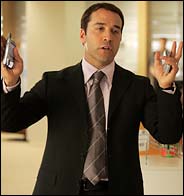
Jeremy Piven plays talent Agent Ari Gold in HBO's Entourage

Jeremy Piven plays talent Agent Ari Gold in HBO’s Entourage

In part one of this article we discussed the agent’s job as a salesman of talent and what agents need from artists in order to sell them. We discussed the Hollywood marketplace and the delicate balance of presenting yourself to an agent as both “new and original” and “like another successful artist.” And we discussed how writers can get literary agents. In this article, we will take a look at how actors, models, directors, singers and musicians can find an agent to represent them to Hollywood or New York.

The methods of finding literary agents mentioned in part one work for actors, models, directors, and singers also, but the major difference is that these artists need to produce a reel (DVD-5 minutes or less) or a demo CD of their work. A reel consists of edited clips from movies, TV shows or commercials they have filmed or appeared in; photos, performances, or songs they have written. In addition, actors also require a headshot and/or resume. Reels are the calling cards of most performance and film artists. The reel should come after you have done some good work that you believe showcases your talent well.

Once you have one, a great thing to do with your reel is to post it online. YouTube and the related online film/video sites are excellent routes to exposure. Set up your own online presence, such as a blog or website, both inside social network sites and independently and showcase your reel there also. Make sure to include a link to this site on your headshot and business cards. Some musical artist and acting/writing teams (especially comedic sketch teams) create their entire act online, gain an audience and sell their product independently. Such artists are usually in a much better position to approach agents, if agents have not already approached them, because they have demonstrated a market for their art.

Perhaps the most unappreciated bit of advice from agents is that actors and models must know their type. One great way to figure this out, if you have not already, is to watch shows to see characters you feel you relate to or could play. Ask friends and family what type of characters they see you playing and what age range they believe you could pull off. When you know your type, get your headshots made to reflect that type. When you are unified in this way, agents will know how to best market you. Furthermore, they will know that you know who you are, which suggests that others will see you clearly, too. All these unities give an agent confidence to represent you.

What does it mean to be unified in your type? An example would be the actor who knows he has performed best in dramatic roles. He may be a funny guy by nature. He may have made people laugh. But most of the praise he has received has come from dramatic roles. Furthermore, he feels more comfortable acting dramatically. The headshot and reels this actor should get should highlight those dramatic elements. His headshot should look serious and dramatic-not charming, funny, silly or cute. The clips he chooses to include in his reel should also reflect that dramatic side. By doing this, he shows the agent a clear picture of an actor who knows who he is. The agent will have no questions about where that actor fits in and when a dramatic role comes for that actor’s type, the agent will think of him.

What that actor does not want is the agent to be confused about whether the actor will work in a particular role. If one clip on the reel is funny or silly and the other dramatic, the agent will not fit the actor in either category at all. As discussed in part one of this article, think “spork.” You do not want the agent seeing you as a spork or a foon. How often do you prefer to use a spork? An artist, in order for an agent to see how to sell him, must be either a fork or a spoon. An artist who presents himself as a multi-purpose entity will only get called when a multi-purpose role is available and may even be overlooked then.

(One side note for actors-January through the end of February is pilot season in TV. Most theatrical agents are extremely busy at this time and it is not the best time for an actor to submit to them, but it is a great time to get ready to submit.)

Knowing your style, voice and genre holds true for musicians and directors, too. If you can play Country as well as Soul, pick one. Do not send your CD to an agent with both genres on it unless you do not want to hear back from her. If you decide on country, dress country in your photos, etc. It’s not hard if you think of marketing yourself to a particular audience. You can not appeal to everyone, so don’t try.

Directors have to know what stories they can tell. You must chose a genre and stick with it. Your reels must focus on the type of films you make best whether comedy, drama, action, horror; whatever you do best showcase only that one style in your reel. Make sure you clearly convey your ability to tell stories on film. And of course, if you’re a comedy director, your reel better be funny.

The best method for models to find an agent is to post your photo set online at one of the legitimate model search agencies. A little research will quickly reveal which ones are legit-the ones with proven success rates. These sites are viewed by legitimate modeling agents and usually charge a set fee to post your photos (less than $150). You only need to register with one, as the same agents look over each site. With a good set of photos (see the sites for examples) you may find your phone ringing soon.

As with literary agents, make sure to utilize the protection offered by the various guilds. Each guild (except fashion modeling, which has no guild at the present) will have a list of agents that are signed to those guilds. You can insure that the agent you submit your material to is a real agent and not someone looking to take advantage of you by submitting only to signatory agents of the various guilds: Screen Actor’s Guild (SAG), American Federation of Television and Radio Artists (AFTRA), Director’s Guild of America (DGA), Writer’s Guild of America (WGA), etc. There is a thriving business of fake agents and producers who make money taking advantage of unsuspecting aspirants. The best way to avoid these cons is to use only agents approved by the various artists’ guilds. You may also want to avoid larger agencies right off the bat. New artists can get lost in larger agencies.

Referrals can come from anywhere and are the best method of making sure your reel, headshot and resume are seen. The more work you do, the more people you will meet and the more chances you will have for getting a referral. Make sure to post your reels online and pursue as many legitimate chances to showcase your art as you can. Networking helps, but it usually requires a pretty close relationship to gain an agent referral through networking. Most people in Hollywood are barely holding on to their own agents, so you may find them reluctant to refer you unless they are not only very impressed with you, but very secure in their own career.

A good option for referrals is any casting director, producer or other person who has been impressed with your work. Mentioning to such a person that you are looking for a good agent and asking whom they would recommend could get you the name of an agent they trust. That agent is then more likely to consider you if you mention that producer’s or casting director’s high opinion of the agent. This is not considered a referral but a suggestion, yet it is legitimate, easy to get, and will likely result in the agent considering you.

Finally, entering competitions, film festivals, posting your reel and your work online and regularly submitting to agents is the day-to-day work of advancing your artistic career. Always do your art. Whatever you do, do not wait for an agent. Produce your own play, CD or short film. Many people have found their way into the business by doing so. If you do your art well and consistently, agents have a way of finding you. And remember, getting an agent is not the end of the road. Even after you land an agent, you must always work at marketing yourself, meeting new people and doing at your craft. Waiting around for your new agent to call usually results in you having a shorter career than you planned.

Update 3/7/2013: (The 2nd edition of  What I Wish I Knew Before I Moved to Hollywood available now exclusively on Kindle for only $4.99. Get yours now. Click here. Kindle e-books can be read on I-phone, I-pod, I-pad, Android, Mac and PC with the free Kindle App.)

Comments (19)

Tags: , , , , , , , , , , ,

What to Expect at Film Festivals

Posted on 11 November 2009 by T. R. Locke

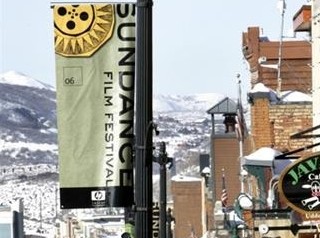
Sundance Film FestivalA short time ago, the following message was sent to me via Twitter:

“@TRLocke– Morning! I need your feedback. What are your expectations and/or objectives when attending a film festival?”

With one of the world’s top four film festival, Sundance, right around the corner (January 21-31st), I thought the answer to that question would be helpful to the readers of this blog as well.

I have to admit that my initial answer to this question was less than favorable. I’ve attended about 20 film festivals in my life—only four of them intentionally.

The first film festival I attended was as a student reporter for my high school newspaper. It was a foreign film festival in Cleveland Heights at the Cedar-Lee Arts Theater. There I saw an amazing film shot in Port-Au-Prince Haiti with English subtitles. My memory of it tells me it was similar to a French version of Slumdog Millionaire without the game show device. Despite my flattering review, I doubt seriously anyone from my high school went to see it.

The other three film festivals I attended because I had a screenplay in contention (Chicago) or because a friend had a film in contention (Hollywood), or because I’d scored free tickets to the L.A. premier of an a movie that won the prize at another bigger film festival (Los Angeles—to see Hustle and Flow with Craig Brewer, John Singleton and Stephanie Allain ).

The rest were by happenstance–usually simply the result of living or working in some artsy district like River North and Wicker Park in Chicago or The Heights in Cleveland, or Burbank (and nearby NoHo—North Hollywood) now. The scenario often plays out like this—I’m walking down the street with family or friends, only vaguely aware a film festival is running, when some young filmmaker pops out of a near-empty theater and desperately begs us to come in and watch his movie for free. We look at each other, check our watches, ask what the film’s about and how long it is and then… sometimes we go. Sometimes we don’t. Suffice it to say, not all film festivals are created equal.

Although film festivals are primarily the domain of directors and producers, there are a few objectives that can be gained by anyone looking to attend. What you can gain is related to whether you’re a film director, producer, writer or actor, etc. Either way, having a plan and reasonable expectations definitely helps.

What follows is a list of what you can expect. The information is gleaned from my own experience as well as a number of other artists and books I’ve read over the years. I’m presenting this information in no particular order.

Contacts.  Regardless of what role you play in the movie business, film festivals are a place to meet people who share your interests and professional goals. These people often show up later at different places along your career path. Networking and meeting different people may help down the line. There’s no real guarantee it will help, but I’ve never seen it hurt.  You may have the opportunity to meet and befriend someone just before their film or yours blows up. Such a person could prove invaluable to helping you in your career. It would be rare—namely because people blowing up as the result of film festivals is rare, but it could happen. Actors and writers particularly stand to gain by meeting directors and producers who may be looking to hire you. The same can be said of cameramen, cinematographers, make-up artists, etc..

Parties. If you’ve been cooped up in an editing room cutting your film for the last six months, a party could do you a lot of good. When liquor’s involved anything can happen.

Education.  There are usually a lot of great panel discussions during film festivals. You can learn new ways to finance your film, new routes to submitting your screenplays to production companies, new ways filmmakers are making money through distributing their films in various markets around the world, cheaper methods of production, new insights into the latest technologies, how the business is changing, or you may even find me there talking about some topic from my book like what to expect in trying to get your film into Hollywood, etc.. Writers can learn about trends affecting the types of screenplays that are being purchased and new avenues for writing in emerging media.  According to a friend on Facebook, Nickelodeon and other studios often present discussion panels at film festivals in hopes of finding new talent for their writing programs or even to staff their shows.

See a Few Good Movies. Though you will likely see some films that make you wonder how in the world someone would put their time and energy into making it, you will probably see a few good films as well. If you’re really lucky, you might get to see the premier of a breakout film and maybe even meet the creators before they become famous and you have to go through their assistants.

Meet an Occasional Celebrity.  Most likely the ones you may meet would be of the B, C, and D-List variety. You likely don’t know their names, but you recognize them, right?  A-Listers are usually kept in a separate room/section/party—popping out to promote their pet pro-bono project (the film that will likely go on to win the top festival award) just before it premiers. But here’s a good chance to get some pics and impress some friends back home.

For those who actually get accepted into a film festival, here are some additional ways you can benefit:

Distribution. This is the grand prize of any filmmaker attending a film festival. “The winner gets a distribution deal.” That’s why most filmmakers enter. But because it’s only a prize for the winners, it’s not really something most should necessarily expect. In fact, even winners are finding the distribution channels for independent films are bottlenecking, according to the festival director at Sundance.

Get Your Movie Seen. Exhibition is another major goal for those entering film festivals. If your film is selected to be shown at a festival, you have the opportunity to be seen by industry professionals and audiences, which could end up opening doors for you. The key here, though, is that you must know that the festival itself is not going to hype and promote your movie for you. Just because your movie is showing in a festival does not mean people will see it. You have to promote it like mad. You went through all the work to make a movie and get it accepted to a festival. Don’t drop the ball now. Finish the work of packing out the house.

Prizes. You may not win the distribution deal, but if you get any kind of recognition to your film, you could use that recognition to help drive promotion later. Any type of prize at any festival looks good on the one-sheet—even if your prize was nothing more than a new Blue-Ray player.

Publicity. Local news media is sure to cover most film festivals in some form or fashion. If your film was selected for a film fest, use that opportunity to score an interview in local press or TV that might help lead to more exposure for yourself or you film.

These are all fairly reasonable goals you can have when attending or having your film in a festival. On top of these direct benefits, sometimes being in an atmosphere with other creative people can really get your juices flowing. Maybe you’ll meet someone who will become your producing or writing partner on your next film. Or maybe you’ll make a connection with someone who has equipment or an editing suite you can use on the cheap. If nothing else, perhaps you’ll meet someone who’s going through the same struggles as you and you’ll realize you’re not as alone as you may have thought.

Most importantly though, look not only for the benefit others can be to you, look for the benefit you can be to others.

Good Luck,

T. R. Locke

Comments (15)

Tags: , , , , , ,

Q&A: “Will Hollywood Reject Me for my Political Views?”

Posted on 04 November 2009 by T. R. Locke

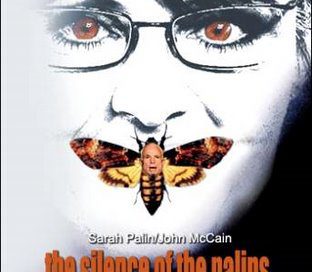
palin-silenceI received a question on my blog from a filmmaker and reader of my book. I’d like to answer his question in this post. For those who don’t know, in my book, I refer to the things I Wish I Knew before I moved to Hollywood as “WIKs”. The question is as follows:

Mr. Locke,

I just had a quick WIK question and I would be grateful if you could take a sec to answer it.  The political climate of Hollywood is far-left to left.  When I move there, will I be blacklisted or in any way discriminated against if I have a believe [sic] in or espouse in a different political ideology than from what currently dominates?

Thanks,
Charles

Excellent question, Charles. My answer is no. Here’s my thinking and belief. This business is really all about the dollars. If your idea has an audience and can make money, it really doesn’t matter what you believe.

Consider this for a minute: Hollywood can be understood to be anything that concerns the media. When you talk about celebrities of any ilk, they are represented by agents here in Hollywood. That means Glen Beck, Rush Limbaugh, Bill Oreilly–they all have Hollywood agents. They are all TV/Radio celebrities and you can’t get much more right wing than they. But not just them, nearly everyone you see anywhere representing any view (including many politicians) have agents in Hollywood. It’s how they get their shows negotiated and their book deals, etc. If money is coming, Hollywood doesn’t care what side of the fence it comes from.

Second, consider this: Hollywood tends to make far more conservative movies than liberal ones. That might sound a bit crazy to you, but think about it. Do you see more movies about war, fighting, and getting rich or about saving the forest, everyone getting along and sharing? Liberal stuff is simply not as dramatic. That’s just a fact. Far more movies are about national pride and willingness to die or kill for country, family, or honor. You could probably pitch an idea called, “Sarah Palin Saves the World” where you have the former Alaska governor flying around in a Huey sniping terrorist and clubbing baby seals. If you can show there’s a big enough audience to make a profit doing so, someone in Hollywood would be willing to make it. Okay, maybe not with clubbing baby seals, but clubbing terrorist, sure–especially if the female lead shows a little skin. For the right price you might even get the genuine article herself—check with her agent.  Remember Hollywood was torturing terror suspects long before Gitmo.

I just saw a report on TV that talked about how militarism is still so much alive in Hollywood. It’s very true. Militarism sells tickets.

Finally, I don’t think Hollywood is really, down inside, as liberal as it’s made out to be. As I said, it’s all about the dollars. Hollywood is notorious for typecasting, stereotyping and pigeonholing anything they can’t immediately see a big market for. They make vampire and sex films, not because they believe in vampires and sex, but because there’s a huge market for it right now. If the market disappears, Hollywood will dump vampire production faster than you can vote down universal healthcare.  Tyler Perry has proven there is a market for African-American films, but judging from production, Hollywood still seems to be hesitant to trust anyone to make one except him.

So to answer your question, no I don’t think you’ll be discriminated against for espousing a different political view—namely because I’m not sure your view is different.  Remember the current governor of California is an actor—and a republican (Schwarzenegger). So was Regan before him.

I will say this though; you will have trouble getting any actual political movie made. Political movies don’t do well in general unless they are a few generations removed. But Hollywood might be happy to put your ideas on radio, TV and books, because in those media, politics sell like hotcakes.

Hope that helps.

TRL

Comments (8)

Tags: , , , , , ,

I’m an ACTOR… Should I Move to New York or Hollywood?

Posted on 16 October 2009 by T. R. Locke

hitchhikerThis is the third in a series of articles about relocating to Hollywood or New York to follow dreams in the entertainment business.

Part II–Actors

If you’re an actor and you’re wondering whether it’s time to move to New York (the home of live theater and a decent amount of film production) or Hollywood (the home of most film and television production), you might want to consider a few things.

In a blog I wrote last week, I detailed information I learned from one of Hollywood’s top stars whom I have the honor of knowing and thus interviewing for my book. Consider these business facts:

  • There are 120,000 SAG (Screen Actor’s Guild) actors in Hollywood.
  • At any given time 85% of them are out of work.
  • The average salary of a SAG actor is less than $10,000 a year.
  • Most of them are just trying to earn the required $7,500 a year to keep their health benefits.
  • 18-20% of them fall into star roles and make serious money.
  • Less than 1% are the ones you read about and know, the real stars, the actors who make million dollar and double digit million dollar salaries.

The actor I interviewed falls into that last group—earning $250,000 an episode for his role in a hugely successful show. He’s one of the lucky ones. But it took many years for him to get to that point.

The question that is perhaps most important in making this decision is whether the move will afford you greater opportunities than it will cost you to do it.  Here’s what I mean:  It is obvious that there are many more auditions being held in Los Angeles and New York than in Baltimore, Cleveland, Tampa, Salt Lake City and perhaps the rest of the country combined. But what might not be so obvious is whether that translates into a better shot at becoming the actor you want to be. It would seem it should. But consider this:

  • There are many more actors competing against you for that very reason.
  • Because there are so many actors, there are gatekeepers set up in L.A. and N.Y. to block many newbies.
  • Many of the actors competing against you have far more experience than you may have.
  • If you don’t have an agent (most new actors in Hollywood/N.Y.  don’t), you may not even hear about the auditions for your type.
  • It will cost you far more money to wait for your chance in N.Y. and L.A. than any other place in the country.

Again, I’m not writing this to pour water on your fire. I’m writing this because I believe, as one quote says, “The best way to achieve your dreams is to wake up.” By wake up, I mean recognize the realities of the world you are looking to enter. Too often young actors are lured to Hollywood with dreams of becoming the next Will Smith or Jennifer Aniston. They are lured by the glamour of the less than 1% of actors who enjoy such glamor. Not many have their hearts set on even being one of the 18-20% group—those actors whose faces you may recognize, but whose names you don’t know.

It’s much easier to be a big fish in a small pond. One thing for sure about Hollywood, here you are swimming in the Ocean. Before you move here, make sure you’re ready for the salt water and sharks.

How do you do that? You get big in your town first. You find the theater groups that are active where you live and get involved. If you live in a very small town, you might want to move to a city near you to expose yourself to more opportunities.

Most actors considering a move to New York or Hollywood should have already done these things. If you have succeeded in those smaller ponds, move up to a lake. There are many acting opportunities in larger cities like Las Vegas, Orlando and Chicago. You may want to cut your chops in those large cities first. Doing so will get you used to the process so that, when you do get your shot in L.A. or N.Y., you’ll know better what to do to win the role.

But say you’ve done that as well. Let’s say you’re going to get a roommate (or two) and make the costs of living in one of these cities as cheap as possible. What’s the benefit of moving to N.Y. or L.A? Mmm…?  Maybe sharing my story would illustrate it best.

Here’s the set up: I moved to L.A. with my family after placing as a semifinalist the Chesterfield screenwriting contest, getting an offer to purchase my screenplay, and attaining representation as a screenwriter. At our new apartment in Burbank another couple had moved here in support of their son’s acting career. He’d won a major talent contest in New Mexico, had gotten an agent and booked a few TV shows and movies. The mother had just taken a job as an agent with her son’s talent agency.

Within two months of being here, while chilling in the hot tub by the pool, the mother asked me if I’d ever done any acting. As it so happened, I’d been the star of nearly every high school play we’d done from my sophomore year forward. She said she’d like to rep me, my wife and daughter as actors because she believed we’d book a lot of roles. I thanked her, but said “no.” I was focused on writing.

My wife and daughter, however, said, “Sure! That sounds cool.” Soon they were in movies—The Italian Job, The Hulk, Legally Blonde;  commercials for Time/Life, Rent-a-Center and others, and making decent money while hanging out with the likes of Mark Walhberg, F. Gary Gray and Mekhi Phifer—all without having taken a single acting class or having any experience at all. Once my wife took a few classes, she booked more work. After two years of being asked, I finally said, yes. Before long, I too was booking commercials for Time/Life, Papa Johns and others and going on auditions for movies and TV shows including Stargate Atlantis, CSI,  and ER.

My point is that none of us had any intention of being actors, yet we fell into it in Hollywood. However, none of us are famous, nor have we made a career of acting as the less-than-1-percent actor I mentioned above. He too fell into acting—in college—in a small town. He moved to medium city—got big there in the local theater groups, then moved to N.Y. where he did Broadway and off-Broadway shows. Finally, he moved to L.A. where he struggled for nearly 20 years before he became a less-than-1-percenter. But he succeeded at making a career of it because when he got to L.A., he knew the game thoroughly. He pursued his dreams wide awake and understood it might take many years. He was ready to swim in the ocean.  The question is, are you?

Now tell me what you think. Do you agree? Disagree? Please share from your experience in the comments below and share this article with others. Also look for my next article on Singers and Musicians in the next few days and please check out my book for the complete stories and all the other advice from this actor and many other successful celebrities.

Good Luck

TRL

Update 3/7/2013: (The 2nd edition of  What I Wish I Knew Before I Moved to Hollywood available now exclusively on Kindle for only $4.99. Get yours now. Click here. Kindle e-books can be read on I-phone, I-pod, I-pad, Android, Mac and PC with the free Kindle App.)

Comments (26)

Tags: , , , , , ,

8 Essential Keys to Acting Success!!!—What One Star Says Actors Need to Know

Posted on 08 October 2009 by T. R. Locke

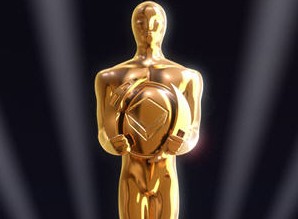
AwardOscar“Here are some statistics you may not know—there are 120,000  SAG (Screen Actor’s Guild) actors in Hollywood. At any given time 85% of them are out of work. The average salary of a SAG actor is less than $10,000 a year.  Most of them are just trying to earn the required $7,500 a year to keep their health benefits. 18-20% of them fall into star roles and make serious money.  But less than 1% are the ones you read about and know, the real stars, the actors who make million dollar and double digit million dollar salaries.” –From I Followed My Bliss to Bankruptcy–What I Wish I Knew Before I Moved to Hollywood pg. 208

The star I interviewed for my book, which gave me the facts above, earns a reported $250,000 per week for his considerable skills learned through his years of experience. Most of those years passed with barely a livable wage from his craft.

“For one period of time, about three years, our family survived on my wife’s income. She was out working while I cared for our child. You can start to question what you’re doing wrong and what’s going on. I would do well on an audition, but couldn’t get to the next level.” –page 209

Three years. Things have only recently changed.

“I got a stint doing recurring roles here and there. I have friends who became huge stars very shortly after arriving here. We worked together in New York doing Broadway. We came out here together and acting success happened for them much quicker. It just took longer for me. Other very talented friends still have not broken through.”

And that’s how it is. Some make it right away and others labor on for years.

In my book, I chose to interview celebrities and successful Hollywood artists to see what they knew that others who hadn’t succeeded did not.  They knew what it was like to succeed and they understood the demands on the life of a successful actor, writer, singer, producer, director, etc. I chose to interview them anonymously because I wanted them to feel free to be completely honest–neither afraid of hurting someone nor being retaliated against by someone later.  (In hindsight, I could sell a lot more books if I hadn’t promised that anonymity, but I believe the honesty gained improves the quality of the information.)

One thing they all agreed it took to succeed was a tenacious unwillingness to quit.  The realities can be pretty grim for artists in Hollywood. Here one is surrounded by the successful, the wealthy; the ones with the power to make movies, music, or headlines everywhere they go. It might sound glamorous to tell your friends you were on set today with Megan Fox or Will Farrell, but when the difference between what they are paid to be there and what you are paid to be there is millions of dollars, and your not sure if you will be able to pay your rent tomorrow, it can be hard to bite the bullet and keep pushing forward towards your acting success. Hope, in Hollywood, is a skill set you must possess.

Acting success also doesn’t come to those who can’t take rejection. Rejection for an actor can feel very personal. After all, it is the actor who stands before the casting director speaking her lines. It is this same actor who then hears “Thank you!” in the middle of her sentence and is escorted out past the next young thespian who looks enough like her to be her sister. According to this TV star, acting success is about business and rejection is part of the business.

And contrary to oft taught belief that success in Hollywood is all about who you know, according to this star,

“It’s not really about who you know, but being in the right place at the right time. It’s about being steadfast. You come in, do the job. Most people who make it are just lucky. They have the look the casting director is looking for—so the casting director takes whatever talent the actor has. Most times what the actor has lends itself more to celebrity than to talent.” –page 207

That explains a lot. When he first arrived in Hollywood, this actor counted among his fans the hugely successful TV producer Steven Bochco (Hill Street Blues, NYPD Blue, LA Law). Although that relationship led to occasional roles on Bochco’s shows, it didn’t lead to constant employment or stardom.  This actor’s journey in Hollywood went from bit part to small recurring role for nearly 20 years before he finally had “the look.”

That quote might even explain why many get into the business of acting—seeing some actor in a movie and thinking, “I can act better than that.” That may be true, but will you be at the right place at the right time? One thing is clear, the more auditions an actor goes on, the more chances she has for making it eventually.

Here’s another great nugget of truth he shared,

“L.A. is not really about acting. TV is a producer’s medium. Film is a director’s medium. Actors have no real control. Sometimes you do a take and you think you did it well and the director wants you to do again in a different way. So you do. They may use the take that isn’t how you wanted to do it. But it’s their decision. Once you understand and know your place, you’re cool.”

Who would have thought that? A director, no doubt. Of course film is the director’s medium. That why director’s get to call it “a film by” and get their names above even star’s names. Yet it’s unlikely an actor would expect to have his best work discarded because the director or producer preferred the take where the actor looked less than his best.

The interview with this great and wise talent went on for much more in the book, but the last piece of advice I’ll share from him here now is this:

“Young actors don’t realize this, but acting is one of the most unglamorous jobs there is. It’s one of the most fickle. There are some great rewards, but this is a business. The things you think they look at, they don’t. It’s really a war of attrition. You stick around long enough, you’ll work. If you come here looking for all the perks and accouterments, then you’re in it for the wrong reasons because you really have no control over those things.”

Great truth to keep in mind as you look for your acting success in Hollywood.  For more from this and other interviews with successful writers, directors, actors, singers, film and record producers, to help save you years of frustration and to encourage you on your Hollywood journey , please check out my book. I guarantee you’ll be glad you did.

Good Luck.

T.R. Locke

Update 3/7/2013: (The 2nd edition of  What I Wish I Knew Before I Moved to Hollywood available now exclusively on Kindle for only $4.99. Get yours now. Click here. Kindle e-books can be read on I-phone, I-pod, I-pad, Android, Mac and PC with the free Kindle App.)

Comments (6)

Tags: , , , , , , , , ,

Michael Jackson and the Dark Side of Hollywood

Posted on 02 July 2009 by T. R. Locke


Dark Side of HollywoodNow that the doctor responsible for giving Michael Jackson his fatal overdose is on trial in Los Angeles, I thought it might be a good time to revisit one of the first post on this blog about the Dark Side of Hollywood…

It was reported last night on NBC news that a source close to Michael Jackson said the superstar was so distraught about being forced to do fifty concert dates in London, instead of the ten he wanted to do, that he may have accidentally killed himself through an overdose while trying to make himself too sick to carry out the contract.

The mere accusation of such a disturbing possibility shines a light on the reality of the dark side of Hollywood. When people talk about Hollywood, they are generally talking about the entire world of entertainment. Entertainment to the average person is fun-movies, music, dancing, television, sports, live theater, magic. It’s all the great stuff we pay to see or do because our participation takes us away from our day-to-day.

But for those who are the creators and producers of entertainment, a better term might be “Show Business.” There is the show. And there is also the business.

Michael Jackson loved the show. The same source on NBC reported he could talk about old movies, dance moves and music for hours, but when it came to negotiating contracts and the legal technicalities, MJ took a much dimmer view. Most artists do likewise.

That’s why Hollywood is full of people who make the business side of show business happen-agents, lawyers, producers, promoters, marketers, advertisers, accountants, banks, corporations, distributors, publicists, secretaries, assistants, drivers, construction workers, electricians…

For an artist, Michael Jackson was a very shrewd and intelligent negotiator. He was one of the first artists to maintain ownership of his own masters and publishing rights to his music (something Paul McCartney actually advised him to do). MJ took the advice so seriously that he also purchased the rights to half of the Sony music catalog that controls the Beatles music as well.  No doubt this shrewdness grew out of the massive experience of Michael Jackson’s 45-year career and having been on the short end of negotiations early on.

But just because Michael was good at negotiating doesn’t mean he enjoyed it. Most artists don’t. The vision artists have of coming to Hollywood might include getting rich, but it rarely includes the minutiae and details required to actually make getting rich happen. Artists usually just want to be discovered-to have the chance to make their living doing something they love. They’ve seen the money come for others and they hope it will come for them, too, but someone else usually handles that. And that someone else gets rich too. Very rich. And usually that someone else is much more powerful than the artist-no matter who that artist is.

When the artist (the show) and the people running the business of that artist are in sync, Hollywood is at its best. Great art can be produced and the world can get to enjoy it. The artist grows wealthy and famous and the money flows. But when the artist and the people running the business of that artist get out of sync, lawsuits, threats, drug addiction, depression, sickness, exhaustion, confusion, disappearances, bad artistic products and even death occur.

This is the dark side of Hollywood. It’s what awaits every artist who comes here. Whether the artist falls victim to this dark side or not, he will certainly face it. Eventually, the artist, whose art most freely flows from his own willing creativity will find himself being forced to do something he doesn’t want to do because it interferes with the business side of his show.

Business people don’t really understand what it takes to create art. They’ve studied a system of rules, formulas, legalities, educated guesses and leveraged hunches to determine what they believe (or sometimes know) will create money. So as an artist, if your lyrics, your story, your jokes, your self-expression, your movie ending, your energy level, your friends, your family, your desire to try something new, your vision, your look, your new wardrobe, etc. doesn’t jib with their scheduling, market testing, product lineup, distribution policy, Asian market strategy, image consultation or calendar, etc., you’ll find yourself confronted with the dark side. And in the worst cases, that dark side cannot only kill your art, but it can kill you.

The dark side of Hollywood reminds me a bit of that that old fable of the goose that laid the golden eggs. The man takes and kills the goose in order to more quickly get at all the golden eggs inside. In the fable, there are no eggs inside the dead goose. The man learns his lesson about greed and patience and caring for precious possessions. The goose must keep living, be healthy, and take his good time to produce golden eggs one at a time. But in Hollywood they can kill the goose that lays the golden eggs and no longer get the new eggs, but instead sell Golden Goose t-shirts, make Golden Goose movies, sell GG collectibles, copies of other eggs, commemorative special edition DVDs of the Goose’s Best Golden Egg Lays, televise gala events of famous people talking about their Golden Goose experiences and sell advertising spots, play old Golden Goose movies and, of course, dress up a duck in goose feathers, paint some eggs gold and shove them up the duck’s ass-the people won’t know the difference when they pop out.  Now, instead of one Golden Goose, there are twenty-all aimed at different markets, all saying and doing exactly what the surveys and market research says they should.

The dark side of Hollywood is that any artist, any art is first and foremost a product to sell. It’s one thing when the product being sold is a machine, a coffee cup, a wallet or a car. Such things can be marketed at will or disposed of without much consideration if it doesn’t sell well. It might seem another thing altogether when what’s being sold is a human being-his thoughts, ideas, dreams, visions…his music. But in Hollywood there is no difference.

Comments (9)

Book Critique 1
Herman Review
Buy At Barnes and Nobel
YourGhostwriterOnline.com
Twitter
Proctor Review
Script Coverage
Trujillo Review
Buy My Book at Amazon
Craig Review
Buy at a Bookstore Near You

Twitter followers

Twitter followers

Follow T. R. on Twitter:

Follow @TRLocke on twitter.