Archive | The Business of Entertainment

T. R. Locke’s 2nd Edition Hits #1 Hot New Releases

Posted on 02 April 2013 by T.R. Locke

#1 Hot New Release in Music BusinessBurbank–April 2, 2013–Since yesterday was April Fool’s Day, I decided to hold off on this post until today lest anyone think I was joking when I posted on Facebook yesterday that the 2nd edition of my book, “What I Wish I Knew Before I Moved to Hollywood” hit #1 in Hot New Releases in the Kindle store for books on the Music Business.  It is currently ranked the #6 bestseller overall in that category, climbing up from #14 last week in that same category.  For all music business books, print and electronic, it leaped 40 spots to #32 this week, from #72 last week.

The book also rose in the kindle category of Bestselling Humor and Entertainment–Movies and Video from the 90s to a solid #46–ahead of “Save the Cat Goes to the Movies” and “Script Lab’s Encyclopedia of Screenwriting.”

The strength of the book sales is buoyed by positive word of mouth and numerous 5 star reviews on Amazon and across the web. Often a book premiers and takes off within a week of release only to see sales slack off. But What I Wish I Knew Before I Moved to Hollywood is steadily moving up the charts as more and more people talk about it and Amazon consistently features it because of its strong sales.  Moved up to #6

The radio interview I conducted with host Bill Thompson of The Bookcast last week, where he referred to me as “a wise Buddha” no doubt helped fuel the boost as well. The  interview is available here.  Although mostly focused on the struggle of artist dreaming of Hollywood, the interview was able to touch on the concept that achieving all dreams requires a certain singularity of focus that encounters significant resistance no matter where those dreams lead. The skill set an artist needs to overcome a negative critique or poor record sales or failed audition is similar to the skill set needed for a businessperson to overcome a failed product launch, or a difficult market. The same mental power needed to push past the negative self-talk and self-destructive behaviors that often plague artists, is needed to overcome everyday obstacles as well.  The book is invaluable for anyone looking to be an actor, singer, rapper, director or producer, but it is still very powerful for people seeking hope that dreams can and do come true.

I’m a bestselling author now. I’m living proof of the concepts that I share in the book. But don’t take it from me–take it from the Emmy and Grammy-winning artists, the platinum selling producers and TV Stars I interview who share their 100+ years of combined experiences.

On June 1, 2013,  I will be speaking at the Organization of Black Screenwriter’s (OBS) Monthly meeting. Various topics are being considered for that meeting including: “Protecting your Artistic Soul–How to Keep Hollywood from Killing your Dream,” “Novelizing Your Screenplays–Stop Waiting for Hollywood to Validate (or pay) You,” and various other topics related to issues  covered in the book. (More details to follow.)  Stop Waiting for Hollywood to Validate You is a comment from an #46 in Kindle --Humor and Entertainment- Movies and VideoEmmy-Winning producer I interviewed in the book.  The phase is indicative of a mindset that plagues so many artists. Artists often believe they are talented, but act as if they are helpless until someone bestows validation on them–a contest win, a contract, an agency agreement, a million-dollar paycheck–or even an unpaid internship. It’s a mindset that begs to be disrespected.

I hope to help fuel a new movement (or at start a conversation about a new movement)  in Hollywood. There are so many amazing stories out there that are sitting around waiting for some Hollywood producer or actor to shepherd them to the big screen.  But what makes it to big screen is completely controlled by mass appeal. Or better yet, by what someone believes will have mass appeal. Even better–what someone thinks has mass appeal… AND LOTS OF LUCK. I want to see writers taking control of their own destinies. Writers are the creators, and the Hollywood dragon lives on our blood. Without writers Hollywood dies. The only reason Hollywood doesn’t respect writers more is because writers don’t respect themselves more.

Writers, actors and other artists have more opportunity today than ever to reach their audience and to make a living as the professional they dream of being. What I Wish I Knew Before I Moved to Hollywood is a guide for helping artists take control of their power, hold it, and wield it to their benefit. It is priceless reading for those who’ve not yet arrived in Hollywood, but it has immense relevance to those here working day-by-day as well. Give your friends and family members the gift of encouragement and the key to following dreams with their eyes wide open. Check out the book today.

Comments (1)

2nd Edition Hits Bestseller’s and What’s Hot Lists in Multiple Categories

Posted on 26 March 2013 by T.R. Locke

Bestseller Baby Book #13 on Amazon in Music Business BooksLess than three weeks after its March 03, 2013 release exclusively on Amazon for Kindle, the 2nd edition of my book, What I Wish I Knew Before I Moved to Hollywood, hit multiple Bestseller’s and What’s Hot lists on Amazon.

In Kindle Books, it landed at #13 in books about the Music Business. In all books about Music, including paperbacks and hardcovers, it hit #72–even landing ahead of Quincy Jones’s book “Q on Producing,” which was #88.

It also hit the Amazon Hot New Releases List in multiple categories including for all books on the Music Business #4, Music General #65,  and Humor and Entertainment: Movies, #44.  Scoring #4 on the Hot New Releases Music Business List gave it the honor of appearing sandwiched between Madonna’s “Body by Madonna” and a Biography of the Rolling Stones, “A Prince Among Stones.”Hot New Releases in Kindle Store

Along with my own outrageous ride as a screenwriter and actor in Hollywood, What I Wish I Knew Before I Moved to Hollywood recounts the stories, struggles, triumphs and lessons learned of numerous creative artists in the fields of filmmaking and television–including award-winning actors, festival-winning directors, Emmy-winning producers, network executives, movie stars, staffers, comedians and screenwriters. In the filed of music, interviews with Grammy-nominated singers, songwriters, and platinum-selling music producers reveal Hollywood from a perspective few see without years of experience and success.  Overall, the book encourages readers to follow dreams while their eyes wide open, whether those dreams lead to Hollywood or their own hometown.#44 in Hot New Releases Movies

The new 2nd edition is updated and expanded with additional interviews and insights. It is available exclusively on Amazon Kindle at a discounted $4.99 and can be read on all Apple and Android devices as well as Mac and PC with the free Kindle App.

I’m encouraged by the success of the book so far and look forward to seeing it grow in popularity and usefulness for artists and for anyone  who seeks encouragement to take the risks to follow their dreams. Please share and tell friends and family about the book to help keep it selling  well and helping people. Without you, none of this is possible.

Comments (4)

Tags: , , , , , , , , ,

New E-Book Releases–Goodreads Giveaway for Paperback Launches

Posted on 14 March 2013 by T.R. Locke

Kindle Book ImageEvery year 111,000 people move to L. A.–many of them looking for success in the entertainment industry. Tens of thousands audition for American Idol, America’s Got Talent, X-Factor and other talent shows hoping to break into an industry most only think they know. My goal is to help them know it better so that they have a better shot at their dreams.

On March 7th, I released the 2nd edition of What I Wish I Knew Before I Moved to Hollywood exclusively on Kindle. The new edition contains new interviews with an Emmy-winning producer and Film-festival winning screenwriter/director along with the interviews with Grammy-nominated singers, platinum-selling producers and award-winning movie and TV stars. The new edition is available for only $4.99, which is about a 1/3 the paperback price.

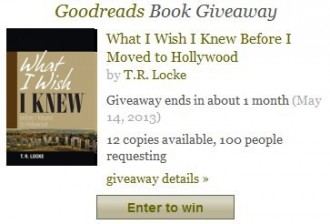
To help spur interest in the new edition’s release, I’m giving away 12 autographed copies of the 1st edition paperback in a contest on Goodreads (Click here to enter).  The contest runs through May.

If you know or care about anyone even thinking about a career in the entertainment business, no matter where they are in the process, get them this book. The title is What I Wish I Knew BEFORE I Moved to Hollywood, but the information is good for people already in Hollywood, too. What does it take to keep going?  How do you get seen? How do you get booked? How do you stand out?  What is your voice? Your niche? Your type?  And how do you stay encouraged in the hard times? Every year 111,000 move to L. A.  But every year 100,000 move away–many dejected, frustrated and sad. Those are the ones who didn’t read this book.

What’s it take to make it as a singer in Hollywood–read what Chante Moore had to say about it in my book. Trying to be comedian? Read what a standup comedian and writer for Steve Harvey, D.L. Hughley and Bernie Mac says. Want to be a producer? See what the Emmy-winning producer has to say. Want a directing/screenwriting/development deal at HBO? My interviewee had one.  Want to be an actor? Find out what a star who makes $250,000 a week says about how to become one. Want to do make-up? Find out what the head make-up artist for one of Fox’s hit dramas says you should do. Want to rap or make beats? Find out what Dr. Dre and Ice Cube’s go to guy says.

Artists love to act like they have it all together–keep a smile, be positive, stay away from negative energy. That’s all great. But are you getting where you want to go? If not, it smart to get help when you need it. It’s one thing to make others think you have it all together; it’s quite another to fool yourself.

Comments (1)

How to Get Attention

Posted on 26 February 2013 by T.R. Locke

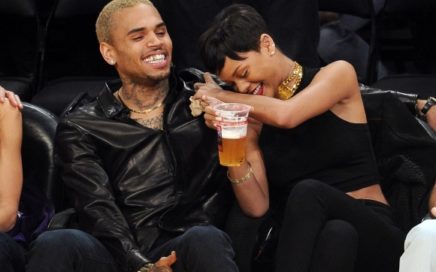
chris_brown_rihanna_camouflageThree years ago, after Chris Brown brutally beat Rihanna, I posted an article that suggested the couple must have been slated to star in a remake of What’s Love Got to Do With It?–the Ike and Tina Turner story. This year, the couple reappeared seated next to Kobe on the floor at a Lakers’ game just prior to appearing together at the 2013 Grammys. Despite still being on probation, Brown made news only days earlier for attacking the openly gay singer, Frank Ocean, over a parking spot at a West Hollywood studio.  Ocean’s revenge was to beat Brown for Best Urban Contemporary Album. Judging from Ocean’s performance that night of his song “Forrest Gump,” Brown doesn’t have to worry about Ocean beating his stage performance.

Isn’t it interesting though how celebrities get headlines right before their new album, tour, or book? It doesn’t matter if the news is negative or positive as long as people are talking about them.

beyonce-3_4_r536_c534This is particularly interesting because the Rihanna’s and Brown’s relationship sparks so many comments and emotions: “She’s stupid for being with him.” “He’s was a child–he made a mistake–let it go.” “He’s an abuser, it will happen again.” “It’s none of our business.”…etc.  Fact is that it doesn’t matter if you’re for or against them, their relationship generates the attention it is meant to generate. Is it real? It doesn’t matter. The only thing we know for sure is that it succeeds at keeping them in the media.

Beyonce must have something coming up.  She showed up at the Superbowl and did a great job. A couple of weeks later, she released a self-made movie on HBO about her greatness called, “Life is but a Dream.” And just the other day, I caught her on TV talking to Oprah. In both the movie and the interview, she revealed that she lost her and Jay-Z’s first baby. Such tender reveals endear her to her base and make them even more likely to see her on tour, buy her next album or check out her next movie.  Yes, a celebrity suffering a miscarriage, an addiction, a abuse, an accident–or even just saying they did–can be good for business.

In the article three years ago, I talked about Whitney Houston admitting her drug addiction to Oprah right before releasing her latest album. The album went to number one. Unfortunately, as predicted then, Whitney apparently went back to drugs, which ultimately led to her passing away just before the Grammys last year.

Back when I first wrote my book, “What I Wish I Knew Before I Moved to Hollywood,” I wrote an article about Michael’s unfortunate fate and the Dark Side of Hollywood that forces artists to produce and keep producing. In the film, Beyonce made a point that many artists no longer do full albums because of costs and the way individual songs are released over I-Tunes, etc. “People just try to make a hit single and that’s it.”  What that means is that studios have artists on much shorter leashes–produce a hit or you’re done; sell out a concert or that’s it.

Maybe you never thought of it before, but when you see artists make these kinds of extreme confessions of personal struggles, or when you watch an artist appear to self-destruct in public, imagine how desperate they must be. These are the lengths to which they must go to get and keep your attention. What appears to be a passerby simply telling what he witnessed in a parking lot in West Hollywood may actually be a well-placed story by a PR firm, and quite possibly a staged event, designed to do exactly what it did–get you talking about an artist. So it doesn’t really matter if your opinion is favorable or not–all that matters is that their name crossed your mind that day.

Dave Chappelle said that either a lot of very talented people suddenly go crazy one day, or there is something very sick about Hollywood. Perhaps artists like Dave, Michael and Whitney are the canaries in the cave revealing something wrong with the business or, perhaps, they are just folk suffering with their own issues. I’d love to hear your thoughts below.

(The 2nd edition of What I Wish I Knew Before I Moved to Hollywood  available now exclusively on Kindle for only $4.99. Get yours now. Click here. Kindle e-books can be read on I-phone, I-pod, I-pad, Android, Mac and PC with the free Kindle App.)

Comments (2)

Tags: , ,

Trump Romney Team for New Reality Show

Posted on 25 October 2012 by T.R. Locke

BURBANK–   Who wants to be a Billionaire Survivor Factor Celebrity Apprentice? The secret is out in Burbank this morning after many attempts to cover it up.  Donald Trump announced Monday that he had an October surprise that would have consequences on the presidential elections.  Lawyers at NBC, ABC, Fox and CBS moved quickly to stop the eccentric Trump from violating the secret contract signed on Saturday by the networks and presidential candidate Mitt Romney.  No publicity was to be released about the deal until after the election just in case some miracle should occur that allows Romney to win.  Trump’s announcement turned out to be a sad publicity stunt for another project and not a reveal of the network deal as suspected, but the reaction of the networks to ensure secrecy, as often happens in Hollywood, caused the leak.

So what is the story?

Donald Trump is teaming up with Mitt Romney after the election to star in the “mother of all  reality shows” to be carried jointly by CBS, ABC, Fox and NBC–one night on each network Monday-Thursday. The show is tentatively titled “Billionaire Survivor Celebrity Apprentice.”  The biggest twist is that Donald Trump WILL NOT BE HOSTING, but will join Mitt Romney as a contestant seeking to win a billion dollars. It is now widely known that Trump was never an actual billionaire, but roughly as wealthy as Romney. Trump’s worth is estimated at $150 million to $250 million, which is about half  the amount his father left him in inheritance. Though Trump has branded himself a billionaire for years, insiders know it is only for marketing. Both multimillionaire celebrities will be competing against others–including so far: Kim Kardashian, Damon Dash, P-Diddy,  and Paris Hilton. Actor Boris Kodjoe was scheduled to be a part of the group, but Trump objected that he was not rich or famous enough; while others complained that it would not be fair to have a participant who had actual talent. Kodjoe, who does speak five languages,  is not known to be very rich. “This has to be about rich guys getting richer,”  Trump is reported to have said.

In another surprise twist, the show will be hosted by Charles Koch–the older billionaire co-owner of Koch Industries–an enemy of environmentalists and clean water enthusiasts around the nation.  The dozen or so celebrity multimillionaires will be tested by the actual billionaire in a four year battle to determine who can endure the most humiliation from the 76 year-old Koch. In the end, only one will be left standing and take as a prize the position as the new billionaire Koch Party Presidential candidate for 2016. “The problem with 2012 is that we did not run a rich enough candidate to inspire the American People. We’re going to start our own party and do it right this time,” said the younger Koch, David. “We’re going to make him a hero to the people by having him win one of these reality shows. That will make the common man feel like he earned his money. By the time we’re through making these guys sniff our taint, America will elect our candidate out of pity.”

The show will run from November through the 2016 election. The networks are expecting a windfall. “This is like all the great shows rolled up into one,” said Les Moonves, president of CBS.  Jeff Zucker of NBC added, “We’re already thinking of ways to combine other multi-network shows. Someone mentioned Hog Wars/X-factor/Duck Dynasty, but we haven’t worked out details yet–still we’re very excited.”

The story sounds crazy, but what’s scary is that when I first published it, most people thought it was true. That’s because it’s not outside the plausible. In fact, I may have given someone in Hollywood an idea. Sarah Palin went from running for Vice President to cashing in on her new found fame through a reality show called Sarah Palin’s Alaska.

Years ago I had a meeting with a television producer, former VP at Warner Brothers, who told me he was working on a reality show that was “like The Bachelor, only it was to select the president of the United States.” I don’t know if he was pitching it to get my reaction or if he was serious. It sounded crazy to me at the time, but it seems to be getting closer and closer to possible. I never heard anything else about it, but who knows? If Hollywood can make money from it, and the people are willing, I’m sure they’ll give it a try.  The way this campaign has been running–with Romney changing positions every week without losing his support, it’s quite obvious people can be made to believe anything–either that or they don’t care. Or is it possible that the lines between reality and fiction have been so blurred that there are people who can’t tell the difference anymore and think the election is just a reality show that means nothing?

(The 2nd edition of  What I Wish I Knew Before I Moved to Hollywood available now exclusively on Kindle for only $4.99. Get yours now. Click here. Kindle e-books can be read on I-phone, I-pod, I-pad, Android, Mac and PC with the free Kindle App.)

Comments (1)

James Franco’s Back-Up Plan

Posted on 18 October 2011 by T.R. Locke

One might think that an actor who’s achieved the success that James Franco has would just content himself with being a young movie star. Usually the million-dollar paychecks and lush lifestyle of one of Hollywood’s elite is enough to satiate even the strongest appetite for success.  That’s why it stood out to me to learn that James Franco was also pursuing an advanced degree in English. By advance degree, I mean PhD.

According to Wikipedia, in addition to graduating from UCLA, Franco:

…moved to New York to simultaneously attend graduate school at Columbia University’s MFA writing program, New York University’s Tisch School of the Arts for filmmaking (NYU), and Brooklyn College for fiction writing,while occasionally commuting to North Carolina’s Warren Wilson College for poetry. He received his MFA from Columbia in 2010. Franco is a Ph.D. student in English at Yale University and will also attend the Rhode Island School of Design.

What a busy guy.  But why? Well, also according to Wikipedia, Franco enrolled in UCLA after being “dissatisfied with his movie career.” Although I’ve been saying for years that Hollywood isn’t all it appears, I wasn’t thinking that applied to people who achieved stardom on the level of James Franco.  Currently, he also teaches a class at NYU on turning poetry into film.

What does all of this tell us about Hollywood? It tells us a little about the quality of effort and focus often possessed by those who succeed here. People think of Hollywood as a place where people live the easy life. For most, Hollywood is anything but easy. Before you make it you struggle to get known, build relationships and do your craft. After you make it, you may struggle with keeping your integrity, staying on top, landing the right roles and not alienating your audience.

In one of the first interviews I did after my book came out, I appeared with a director who almost hired Franco for his first major lead. The director went with another actor instead. During the interview he lamented that, had he hired Franco, he’d be driving a much nicer car now.  (You can see the interview HERE: Part 1, Part 2, Part 3).  Franco noted in interviews that one of the things that initially hindered him in pursuing an acting career was his fear of such rejection. Perhaps that’s another reason he decided to make a backup plan?

My personal opinion is that he was tired of playing certain types of roles and wanted to play someone more intelligent but couldn’t get cast–thus all the press about going back to college.  Is a coincidence his latest role was playing a scientist in Rise of the Planet of the Apes instead of a pot dealer in Pineapple Express 2? By doing something intellectual in his own life, he changed the way casting directors and audiences saw him.

Still, whether you’re the type of person who needs to burn bridges to keep you from turning back, or the type of person who thinks though all the angles, it’s interesting to note that even someone who succeeded in Hollywood at the highest levels still keeps his options open… just in case.

Update 3/7/2013: (The 2nd edition of  What I Wish I Knew Before I Moved to Hollywood available now exclusively on Kindle for only $4.99. Get yours now. Click here. Kindle e-books can be read on I-phone, I-pod, I-pad, Android, Mac and PC with the free Kindle App.)

Comments (5)

Tags: , , , , , , , , ,

Rihanna and Chris Brown to play Ike and Tina in New “What’s Love?”

Posted on 08 December 2010 by T.R. Locke

Was it just to hype their new film?

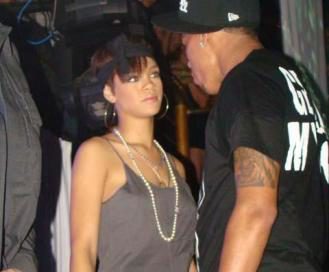
With their reappearance at the 2013 Grammys, some are seeing what I saw three years ago. Since this article explored this couple and Whitney Houston prior to her passing, I’ve decided to feature it again. Here it is if you missed it the first time:

Would you be surprised to see that headline? It seems lately that celebrities resort to the most ridiculous tactics to promote their new films and albums. With competition for news being what it is, the more sensational and outrageous a story hook, the more likely it will find its place on national news shows and in national magazines.

Whitney Houston goes on Oprah with an “exclusive interview” in which she talks about her drug addiction and leaving Bobby Brown. “Oh the horror of our marriage and what was going on behind the scenes,” she said crying, sobbing… “by the way, I have a new album born of my pain. May I sing you a few songs?” And to number one it goes. And since then? Gone—probably back to Bobby, and with her newly minted millions from her album sales… probably crack, too.

Phil Collins (talk about a blast from the past—has he even done anything since the Tarzan Soundtrack?) suddenly appears in Rolling Stone with a shotgun, pick axe, machete, hunting knife and various other antique farm implements laid out on the Persian rug beneath him, looking more like Courage the Cowardly Dog’s owner than a rock god.

From Rolling Stone

“I’ve had thoughts of su-su-suicide and I’m tired of all the people talking about me.” (What people? Didn’t Phil die years ago?) “By the way, I have a new album coming out. It may be my last. You never know. Better go get it.” Oh, that explains it.  Reminds me a lyric from Prince’s Pop Life:

What’s the matter with your life?
Is the poverty bringing you down?
Did the mailman jerk you around?
Did he put your million dollar check in someone else’s box? Tell me.

“No.  I just have an album to sell and talking about suicidal thoughts and paranormal activity seemed the most effective way to relate to this new generation.”

Tyler Perry was next. “I was abused, Oprah! Sexually so. When only a boy…” as the tears stream down his cheeks. “And that’s what gave me the sensitivity to do For Colored Girls… because…well, I was abused just like colored girls who considered suicide when the rainbow wasn’t enough.  I lived it myself. And, yes, it will be in theaters this week packed with all the emotion you see right here before you.”

Some have stories. Others truly live it out. Some seem such a mess that it’s hard to figure out how they even manage to complete any projects at all. I imagine that Lindsay Lohan’s next project is going to be huge.  Brittany Spears’ certainly was. It seemed she was such a wreck before her album came out—shaving her head allegedly over her breakup with Kevin Federline—in and out of various clinics. But that didn’t stop her from putting together one of the best albums of her life. It dropped and everything is great now. Wow. Grammy? VH1 Award? Sure. Thanks. I’m much better. See you next year.

What’s this tell you about Hollywood? Promotion is part of the game. Even Harrison Ford has to drag his dust-farting ass out to worship at the altar of Letterman, Leno, Stewart and Fallon. Harrison can’t even remember what film he was in or what it was about, but he’s there—looking like Han Solo’s grandpappy Dutch Blitz. “Hello everyone. Yes, I’m the guy who played that guy you liked in that movie 25-35 years ago. Hello! Please go see my next movie.” It’s all part of the sell.

Perhaps the one that actually made me laugh was Sting. I caught him on Jon Stewart looking rather annoyed at having to hustle his new CD on TV. But there he was. “I like doing new things,” he said. “I can’t stand playing the same songs year after year—I need to mix it up. That’s why I released this new album with the London Philharmonic Orchestra.”  (He even joked of it being reminiscent of the parody rock band movie This is Spinal Tap where one of the band members thinks his stuff is good enough to have the acoustic versions performed by the London Phil.) And what was the new thing he did with the Philharmonic that he wanted us to run out and buy? The Muzak version of “Every Little Thing She Does Is Magic” and every other song he did 30 years ago and has been doing “year after year” since. I could have sworn I heard that version in an elevator 25 years ago. Nonetheless, sell that “original” album Sting.

Remember it’s called Show “Business” and no matter how big a star you are, you can never stop being a hustler in Hollywood.

PS. Since this article, we mourned the loss of Whitney Houston who, sadly, apparently did return to drugs. What a tragedy that all the people around her could not, or did not,  help her.  And what a commentary on the industry.

Update 3/7/2013: (The 2nd edition of  What I Wish I Knew Before I Moved to Hollywood available now exclusively on Kindle for only $4.99. Get yours now. Click here. Kindle e-books can be read on I-phone, I-pod, I-pad, Android, Mac and PC with the free Kindle App.)

Comments (8)

Tags: , , , , , , , , , , ,

Lessons from DVD Extras–Getting Past the Cut

Posted on 14 May 2010 by T.R. Locke

One of the great places to learn lessons about Hollywood is the commentary section of DVDs.  It’s amazing the insights you can gain from filmmakers talking quite innocently about the process of getting the movie made. Sometimes the things they think they’re teaching you about the movie business aren’t what you walk away having learned. In fact, sometimes you can learn things they don’t really want you to know.

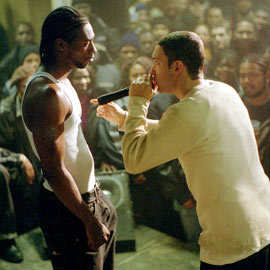
Just recently I watched 8 Mile—the Eminem bio film. The film is about rapper Eminem struggling to become a successful recording artist in Detroit by winning rap battles. It follows the exact same format that most “outsider young person struggles to find himself in a strange world” films (Step Up, Stomp the Yard, Drumline, Bring It) follow.

In the DVD extras, there is a section about filming the rap battles themselves.  Particularly, there is a story about how the film’s director and producers decided they wanted to have local rappers actually battle Eminem in order to get a more gritty realism.

The call goes out among the hundred or so extras who made up the crowd during the club and rap battle scenes. Three rappers, the ones who possessed the skills to top a real rap battle in the room, would then be put in the film as star actors featured battling Eminem. This was a chance of a lifetime for these actors who’d only been booked in very low paying extra jobs where their faces would likely never even be seen (see article on being an extra here). Here was a chance to be credited in a major motion picture, to have the camera right in your face and to be able to launch a career in acting.

Dozens of the extras tried out for the roles. Most were rejected out of hand, but quite a few showed promise. Eventually the contestants were whittled down and three lucky and talented ones were chosen. They were very talented too.

One by one, the rapper/actors/contest winners took their positions before Eminem to battle him. Although initially told to save his voice for the dialogue scenes and only to lip sync his comebacks against these rappers, Eminem couldn’t let the taunts in front of the packed room go unanswered. Impressively, true to his character in the film, he improvised clever responses to each rapper—clearly putting them in their place.

So what did we learn from this DVD extra? That Eminem is actually a very good rap battler? Yes. That’s what the film director wanted us to learn. But here’s what we learned that he didn’t want us to learn: After all of the contest—all of the hopes and dreams of each rapper in that room being placed before them—the promise of a starring role in a major motion picture. After winning the contest and being chosen as one of the three actors to battle the star; after filming the battle against Eminem and rejoicing, celebrating and telling all their friends and family about it; after the movie comes out six to nine months later, after all of the anticipation, after buying the popcorn and taking your seat in the theater….

Not a single one of those actors’ battles appeared in the film.  Every single one was cut. Every one. Those actors are not featured anywhere except in the DVD rap battle extras section. But at least they were featured there. Many actors find their roles, in fact, whole characters cut from movies. Where they expected a reel to show agents, managers, casting directors, or at least a credit for their resume, they may get nothing.

Some executive didn’t think the scene was necessary—one battle too many. Or it didn’t work—the lighting was bad, etc. For whatever reason, the film you starred in you no longer star in. The film goes on to be number one at the box-office—oh well, at least it got released. Hundreds of movies get filmed that never even get released.

Welcome to Hollywood. Such things happen here. They don’t always happen, but they do happen. The point is not to discourage you. The point is to make you aware so that, if it does happen, you don’t give up.

Good luck.

TRL

Update 3/7/2013: (The 2nd edition of  What I Wish I Knew Before I Moved to Hollywood available now exclusively on Kindle for only $4.99. Get yours now. Click here. Kindle e-books can be read on I-phone, I-pod, I-pad, Android, Mac and PC with the free Kindle App.)

Comments (8)

Tags: , , , , , , , , , , , , ,

How to Get an Agent Part 2

Posted on 20 January 2010 by T.R. Locke

Jeremy Piven plays talent Agent Ari Gold in HBO's Entourage

Jeremy Piven plays talent Agent Ari Gold in HBO’s Entourage

In part one of this article we discussed the agent’s job as a salesman of talent and what agents need from artists in order to sell them. We discussed the Hollywood marketplace and the delicate balance of presenting yourself to an agent as both “new and original” and “like another successful artist.” And we discussed how writers can get literary agents. In this article, we will take a look at how actors, models, directors, singers and musicians can find an agent to represent them to Hollywood or New York.

The methods of finding literary agents mentioned in part one work for actors, models, directors, and singers also, but the major difference is that these artists need to produce a reel (DVD-5 minutes or less) or a demo CD of their work. A reel consists of edited clips from movies, TV shows or commercials they have filmed or appeared in; photos, performances, or songs they have written. In addition, actors also require a headshot and/or resume. Reels are the calling cards of most performance and film artists. The reel should come after you have done some good work that you believe showcases your talent well.

Once you have one, a great thing to do with your reel is to post it online. YouTube and the related online film/video sites are excellent routes to exposure. Set up your own online presence, such as a blog or website, both inside social network sites and independently and showcase your reel there also. Make sure to include a link to this site on your headshot and business cards. Some musical artist and acting/writing teams (especially comedic sketch teams) create their entire act online, gain an audience and sell their product independently. Such artists are usually in a much better position to approach agents, if agents have not already approached them, because they have demonstrated a market for their art.

Perhaps the most unappreciated bit of advice from agents is that actors and models must know their type. One great way to figure this out, if you have not already, is to watch shows to see characters you feel you relate to or could play. Ask friends and family what type of characters they see you playing and what age range they believe you could pull off. When you know your type, get your headshots made to reflect that type. When you are unified in this way, agents will know how to best market you. Furthermore, they will know that you know who you are, which suggests that others will see you clearly, too. All these unities give an agent confidence to represent you.

What does it mean to be unified in your type? An example would be the actor who knows he has performed best in dramatic roles. He may be a funny guy by nature. He may have made people laugh. But most of the praise he has received has come from dramatic roles. Furthermore, he feels more comfortable acting dramatically. The headshot and reels this actor should get should highlight those dramatic elements. His headshot should look serious and dramatic-not charming, funny, silly or cute. The clips he chooses to include in his reel should also reflect that dramatic side. By doing this, he shows the agent a clear picture of an actor who knows who he is. The agent will have no questions about where that actor fits in and when a dramatic role comes for that actor’s type, the agent will think of him.

What that actor does not want is the agent to be confused about whether the actor will work in a particular role. If one clip on the reel is funny or silly and the other dramatic, the agent will not fit the actor in either category at all. As discussed in part one of this article, think “spork.” You do not want the agent seeing you as a spork or a foon. How often do you prefer to use a spork? An artist, in order for an agent to see how to sell him, must be either a fork or a spoon. An artist who presents himself as a multi-purpose entity will only get called when a multi-purpose role is available and may even be overlooked then.

(One side note for actors-January through the end of February is pilot season in TV. Most theatrical agents are extremely busy at this time and it is not the best time for an actor to submit to them, but it is a great time to get ready to submit.)

Knowing your style, voice and genre holds true for musicians and directors, too. If you can play Country as well as Soul, pick one. Do not send your CD to an agent with both genres on it unless you do not want to hear back from her. If you decide on country, dress country in your photos, etc. It’s not hard if you think of marketing yourself to a particular audience. You can not appeal to everyone, so don’t try.

Directors have to know what stories they can tell. You must chose a genre and stick with it. Your reels must focus on the type of films you make best whether comedy, drama, action, horror; whatever you do best showcase only that one style in your reel. Make sure you clearly convey your ability to tell stories on film. And of course, if you’re a comedy director, your reel better be funny.

The best method for models to find an agent is to post your photo set online at one of the legitimate model search agencies. A little research will quickly reveal which ones are legit-the ones with proven success rates. These sites are viewed by legitimate modeling agents and usually charge a set fee to post your photos (less than $150). You only need to register with one, as the same agents look over each site. With a good set of photos (see the sites for examples) you may find your phone ringing soon.

As with literary agents, make sure to utilize the protection offered by the various guilds. Each guild (except fashion modeling, which has no guild at the present) will have a list of agents that are signed to those guilds. You can insure that the agent you submit your material to is a real agent and not someone looking to take advantage of you by submitting only to signatory agents of the various guilds: Screen Actor’s Guild (SAG), American Federation of Television and Radio Artists (AFTRA), Director’s Guild of America (DGA), Writer’s Guild of America (WGA), etc. There is a thriving business of fake agents and producers who make money taking advantage of unsuspecting aspirants. The best way to avoid these cons is to use only agents approved by the various artists’ guilds. You may also want to avoid larger agencies right off the bat. New artists can get lost in larger agencies.

Referrals can come from anywhere and are the best method of making sure your reel, headshot and resume are seen. The more work you do, the more people you will meet and the more chances you will have for getting a referral. Make sure to post your reels online and pursue as many legitimate chances to showcase your art as you can. Networking helps, but it usually requires a pretty close relationship to gain an agent referral through networking. Most people in Hollywood are barely holding on to their own agents, so you may find them reluctant to refer you unless they are not only very impressed with you, but very secure in their own career.

A good option for referrals is any casting director, producer or other person who has been impressed with your work. Mentioning to such a person that you are looking for a good agent and asking whom they would recommend could get you the name of an agent they trust. That agent is then more likely to consider you if you mention that producer’s or casting director’s high opinion of the agent. This is not considered a referral but a suggestion, yet it is legitimate, easy to get, and will likely result in the agent considering you.

Finally, entering competitions, film festivals, posting your reel and your work online and regularly submitting to agents is the day-to-day work of advancing your artistic career. Always do your art. Whatever you do, do not wait for an agent. Produce your own play, CD or short film. Many people have found their way into the business by doing so. If you do your art well and consistently, agents have a way of finding you. And remember, getting an agent is not the end of the road. Even after you land an agent, you must always work at marketing yourself, meeting new people and doing at your craft. Waiting around for your new agent to call usually results in you having a shorter career than you planned.

Update 3/7/2013: (The 2nd edition of  What I Wish I Knew Before I Moved to Hollywood available now exclusively on Kindle for only $4.99. Get yours now. Click here. Kindle e-books can be read on I-phone, I-pod, I-pad, Android, Mac and PC with the free Kindle App.)

Comments (19)

Tags: , , , , , , , , , , , , , ,

How to Get an Agent Pt. 1

Posted on 14 January 2010 by T.R. Locke

entourage-w82The usual route to finding a talent agent involves sending out headshots or reels (if you are an actor or model) or query letters and screenplays (if you are a writer) or query letters and reels (if you are a director or producer) or CDs (if you are a musician).

The key to being represented as an artist is for an agent to be convinced that he or she can sell you. In my book, “I Followed My Bliss to Bankruptcy, What I Wish I Knew Before I Moved to Hollywood,” I discuss how most agency rejection comes, not because of a lack of talent, but because an agent cannot clearly see how to sell the artist. This is the central hurdle artists need to overcome.

What does it mean for an agent to believe he can sell you? It means that he clearly sees where you fit in the business. He must either know someone looking buy what you are selling or he must believe that he can convince someone to buy you because you represent a type that is in demand.

What many people do not understand about Hollywood is that it is not just about talent. You may be a very talented actor, writer, director, or even a strikingly beautiful model, but that does not mean an agent will believe he can sell you. What is important to understand is that the agent’s job is a marketing job. They would do well to change their names from talent agents to marketing agents. The best way to understand what an agent looks for and how they do their job is to look at how other products are sold in other industries.

Many artists pride themselves on being different, new, or innovative. They have written a screenplay like no other. They have a style like no one you have ever seen before. From a marketing perspective such newness can spell disaster. How hard is it to get someone to buy something they have ever heard of before? And how expensive is it to get people to know and understand something brand new? Will it work? Does it last? Who can fix it? Will it be around in the future? Does it do what it claims? Is it worth my money? Why buy that when I can buy the one I have used for years? If it is so great, how come no one ever thought of it before?

One example I recently came across was in Bed Bath and Beyond. I was standing in line with my daughter and saw there was an item on display that claimed to replace dryer sheets. From all appearances, it was a small pink rubber ball with little dull spikes on it. It claimed to last for years and to save hundreds of dollars in fabric softener. They were selling a set of two for $9.95.

When we see something like that we can have different opinions. Some of us will buy it based on the novelty of it-we like new things and want to try them out. If they work, great; we will tell our friends. If they do not, cool; we may or may not tell our friends. But the vast majority of people will only come to buy or use a new item after it has been proven-after a few demonstration ads on TV or a segment on the Today Show where some expert claims the dryer ball to be the greatest thing since hamburgers. Over time, more may come on board if the new thing proves to be better than what they are using. That is why when dryer sheets first came out, they mailed them free to millions of people to try in their own homes. Through actual experience, they won people over.

New and different to an agent is very much like the dryer ball. Will it sell? How long? What is the market? How do I sell it and where? What are the risks to my reputation for recommending it if it is not a hit?

If, however, an item is similar to known successful brands, there is more faith the item will sell. That is why there are tons of MP3 players on the market. The Ipod may have been the first and may still be the best selling, but the fact that people know there is a market for Ipods or vampire book or coffee chains, means the chances of developing more and more to reach different segments is possible. Make your MP3 player hold more, costs less, play more formats, etc, and you can steal off a bit of business from Apple.

But, on the other hand, if your MP3 player costs the same, holds the same, and does the same as Ipod, why would anyone bring yours to market? The only reason would be if there is such a demand that Ipod can not keep up. Such is the case with the Twilight Saga. People can read books faster than Stephanie Meyer can write them. So to fill the gap between her releases, there has sprung up a slew of teen angst vampire love books all over Barnes and Noble. Some of these “sagas” have four, five or six books in the series already. They sit on the shelves next to Twilight, New Moon, Eclipse and Breaking Dawn, awaiting the wave of dedicated vampire love story reading girls and ladies to crave again. They are designed similarly to the Twilight books, but promise a bit more sex, more abs or more grit. They take place in college instead of high school, or in the office, or a hospital. You get the point. They are “like Twilight, but different enough to stave off lawsuits.” Likewise, an actor who fits the same type as Taylor Lautner, Keira Knightley, or Natalie Portman could more easily get booked based on the number of films made for actors of that type and the fact that Taylor, Keira and Natalie can not possibly do all those roles themselves.

An agent looks for a client in the same way that any marketer looks at a product it wants to sell. That is why fourteen agents passed on Twilight before one finally accepted it. Twilight was the first rule breaker to get though. Afterwards, every agent went looking for something like Twilight-that is, until the market flooded. Once it floods, being able to sell “another teenage vampire love story” becomes difficult and all the agents go on to the next thing.

So, how do you apply this information to help you get an agent? Let us tackle this by craft. Each discipline has its own angles that lead to agents.

If you are a writer, write the best screenplay you can in the genre you enjoy writing the most. Then write another in the same genre. Many writers make the mistake of thinking the way to impress Hollywood is to show their versatility. In reality, it is a surefire way to confuse an agent and even lose representation if you already have it. Agents and studios need to know who you are and what you do. You either do comedy, drama or action, romance, adventure, etc. You do not do one for one script and another for the next. Being a one trick pony keeps the agent from being confused when he is talking about you. Agents can sell forks and they can sell spoons, but they can not sell sporks or foons because no one buys them. No one buys them because films cost too much money to experiment with. So choose your genre carefully because, if you make it as a writer, you will be writing that genre for a while.

Next, get your screenplay out to agents, producers, and contests. Your agent and producer list can come from the Writer’s Guild of America West (WGAW), which can be found on their website. The WGA lists shows agents and producers who are open to receiving unsolicited screenplays. You can send copies to them and follow up with emails and phone calls. Placing or winning a well respected writing contest will also open doors for you to connect with agents, lawyers, producers and other executives. Such connections can lead to referrals and it is always easier to get an agent via a referral.

Referrals are the best way to get an agent and referrals can come from anywhere. A friend of a relative could get someone to read your screenplay. If you studied writing formally and impressed your professors, most likely early referrals will come from them. A producer who liked your work, but did not feel it right for their company might be willing to refer you to an agent. Or you could hire a lawyer to represent you and he could recommend an agent. All of these are legitimate ways to be referred to an agent.

In the meantime, it can help to start a blog and put your writing out into the world. Get people interested in your stories and perhaps even write for a web series. Doing so can grab the attention of agents who browse the web looking for talent regularly. With the advent of the web and blogging, you can create and instantly publish your stories to a world-wide audience and demonstrate your marketability if you are having trouble convincing agents to rep you. And like the free dryer sheets in the mail, giving away some of what you have can show the quality and style you bring to the table as well develop your fan base.

Although many of these methods apply to actors, models, musicians, and directors as well, we will take a look at those artists in the next article as they have other unique needs to address.

Update 3/7/2013: (The 2nd edition of  What I Wish I Knew Before I Moved to Hollywood available now exclusively on Kindle for only $4.99. Get yours now. Click here. Kindle e-books can be read on I-phone, I-pod, I-pad, Android, Mac and PC with the free Kindle App.)

Comments (6)